
|
|
 |
BA-MIDBAR (Numbers) 1-18 |  |
 Index Page |
Genesis 1-25a |
Genesis 25b-36 |
Genesis 37-50 |
Exodus 1-17 |
Exodus 18-30a |
Exodus 30b-40 |
Leviticus 1-15 |
Leviticus 16-27 |
Numbers 1-18 |
Numbers 19-29 |
Numbers 30-36 |
Deuteronomy 1-25 |
Deuteronomy 26-34 |
Links Index Page |
Genesis 1-25a |
Genesis 25b-36 |
Genesis 37-50 |
Exodus 1-17 |
Exodus 18-30a |
Exodus 30b-40 |
Leviticus 1-15 |
Leviticus 16-27 |
Numbers 1-18 |
Numbers 19-29 |
Numbers 30-36 |
Deuteronomy 1-25 |
Deuteronomy 26-34 |
Links |
|
Portion BA-MIDBAR (1:1 - 4:20) CHAPTER 1 1. Now YHWH spoke to Moshe in the wilderness [b'midbar] of Sinai, in the Tent of Appointment, on the first day of the second month in the second year after they had come out of Egypt, saying, Wilderness: or simply, "uncultivated land". Second month: This is the first new moon within the time of "counting the omer" [measure] between Firstfruits and Shavuoth--a time to take account and consider the significance of our names and which giftings are among each congregation (as per Ephesians 4). This is the first time the authority to go outside the Tent and do something came from within the Tent. 2. "Lift up the heads of the entire congregation of the descendants of Israel according to their clans, by their fathers' households, according to the number of names, every male by their polls. Lift up the heads: count the sum. "By their polls": or census; literally, "for their skulls". Number of their names: Every Hebrew letter has a numeric value, and thus every name has a sum total of its letters. The numeric value of these particular names, possibly in conjunction with the other names in each phrase, is of great significance. Names also have to do with who we are, and this is how Israelites are taken into account. For the sake of the nation, it is important that each one be in his proper place, so his or her gift can be in use in the proper proportion to the rest. 3. "From twenty years old and upward, all that are able to go out to war in Israel, you and Aharon shall number them all by their companies. 4. "And with you there shall be a man from every tribe, each one a head of the household of his ancestors. Tribe: or "branch". 5. "And these are the names of the men who shall stand with you: From Reuven, Elitzur [my Elohim is a rock] the son of Sh'dey-ur [darter of light]; 6. "From Shim'on, Sh'lumiEl [El is my peace], son of Tzurishaddai [The Almighty is my Rock]; 7. "From Yehudah, Nachshon [enchanter], son of Amminadav [my relatives are generous]; The "whisperer" or "wizard" (nachshon) sets the tone for which type of generosity is described here--the type that leads Yehudah today to give away their ancestral Land that YHWH has said must never be given away or sold permanently. The Rabbinic tradition, which stemmed from the P'rushim (Pharisees) and Aqiva, who promoted a false Messiah, also whispered the ideas of the Serpent--ideas such as, "If one cannot prove that a reptile is clean, he cannot serve on the Sanhedrin", which have kept Yehudah on side roads for too long. 8. "From Issachar, Nethan'El [given by El] the son of Tzuar [littleness]; 9. "From Tz'vulun, Eliav [my Elohim is a Father] the son of Chelon [great ability]; 10. "Of the sons of Yoseyf, from Efrayim, Elishama [my Elohim heard] the son of Ammihud [my people are splendid]; from Menashe, Gam'liel [El has dealt bountifully with me] the son of Pedahtzur [the Rock has ransomed]; 11. "From Binyamin, Avidan [my father is a judge] the son of Gid'oni [my woodcutter]; 12. "From Dan, Achiezer [my brother helps] the son of Ammishaddai [the Almighty is my kinsman]; 13. "From Asher, Pagiel [El has met me] the son of Ochran [troubled]; 14. "From Gad, Eliasaf [Elohim has added] the son of DeuEl [know El!]; 15. "From Nafthali, Achira [my brother is evil] the son of Enan [having eyes]." Nafthali's brother was Dan, the one considered to be the ancestor of the False Messiah. 16. These were the ones summoned from the congregation, captains of the tribes of their ancestors; they [were] heads of thousands in Israel. Of these 24 names, all but four are based on either "El" (Elohim) or the relationship to some other member of their family. This is appropriate, because they were personally responsible, before Elohim, for the welfare of their entire tribe. They are distinguished as individuals, yet their importance is chiefly related to how they benefit the whole congregation. Even by their names, they provide for the congregation. The tribes of the sons of the servant-girls are listed after Rachel's sons and Leah's sons. 17. Then Moshe and Aharon [went to] get these men who were specified by name, Specified: or "hand-picked". 18. and they assembled the whole congregation together on the first day of the second month, and they registered by their clans, by the households of their fathers, according to the number of the names, from twenty years old and upwards, for their polls, Registered: or "declared their birth". 19. just as YHWH had commanded Moshe. So he mustered them in the wilderness of Sinai. 20. Now the sons of Reuven, Israel's firstborn, their genealogies by their clans, by the households of their fathers, according to the number of the names, for their polls, every male from twenty years old and upward---all who were able to go out to war-- 21. those who were mustered among them (the tribe of Reuven) were 46,500. Mustered: the word can mean "numbered", "registered", "cared for", or "visited". It suggests that perhaps Moshe took great care to hand-pick these people by visiting them right at their tents. 22. From the sons of Shim'on, their genealogies by their clans, by the households of their fathers, according to the number of the names, for their polls, every male from twenty years old and upward---all who were able to go out to war-- 23. those who were mustered among them (the tribe of Shim'on) were 59,300. 24. From the sons of Gad, their genealogies by their clans, by the households of their fathers, according to the number of the names, every male from twenty years old and upward---all who were able to go out to war-- 25. those who were mustered among them (the tribe of Gad) were 45,650. 26. From the sons of Yehudah, their genealogies by their clans, by the households of their fathers, according to the number of the names, every male from twenty years old and upward--all who were able to go out to war-- 27. those who were mustered among them (the tribe of Yehudah) were 74,600. 28. From the sons of Issachar, their genealogies by their clans, by the households of their fathers, according to the number of the names, every male from twenty years old and upward---all who were able to go out to war-- 29. those who were mustered among them (the tribe of Issachar) were 54,400. 30. From the sons of Z'vulun, their genealogies by their clans, by the households of their fathers, according to the number of the names, every male from twenty years old and upward---all who were able to go out to war-- 31. those who were mustered among them (the tribe of Z'vulun) were 57,400. 32. Of the sons of Yoseyf, from the sons of Efrayim, their genealogies by their clans, by the households of their fathers, according to the number of the names, every male from twenty years old and upward---all who were able to go out to war-- 33. those who were mustered among them (the tribe of Efrayim) were 40,500. 34. From the sons of Menashe, their genealogies by their clans, by the households of their fathers, according to the number of the names, every male from twenty years old and upward---all who were able to go out to war-- 35. those who were mustered among them (the tribe of Menashe) were 32,200. 36. From the sons of Binyamin, their genealogies by their clans, by the households of their fathers, according to the number of the names, every male from twenty years old and upward--all who were able to go out to war-- 37. those who were mustered among them (the tribe of Binyamin) were 35,400. 38. From the sons of Dan, their genealogies by their clans, by the households of their fathers, according to the number of the names, every male from twenty years old and upward---all who were able to go out to war-- 39. those who were mustered among them (the tribe of Dan) were 62,700. 40. From the sons of Asher, their genealogies by their clans, by the households of their fathers, according to the number of the names, every male from twenty years old and upward--all who were able to go out to war-- 41. those who were mustered among them (the tribe of Asher) were 41,500. 42. From the sons of Nafthali, their genealogies by their clans, by the households of their fathers, according to the number of the names, every male from twenty years old and upward--everyone who was able to go out to war-- 43. those who were mustered among them (the tribe of Nafthali) were 53,400. 44. These are the ones who were mustered, whom Moshe and Aharon mustered, as well as the captains of Israel, 12 men; each of them was for the household of his ancestors. 45. Thus all who were mustered from the sons of Israel, according to the households of their fathers, from twenty years old and upward--all who were able to go out to war in Israel-- 46. The total of those mustered was 603,550. 47. But the Levites, after the tribe of their fathers, were not numbered among them, Angus Wootten notes that when there were 603,550 Jewish residents in "Palestine", the modern nation of Israel came into being; when there were this number who could go to war, the city of Yerushalayim was recovered. Yet Efrayim, YHWH's firstborn (Yirmeyahu 31:9), which correlates with the Levites who were taken in place of the firstborn (see 3:13ff), were not counted among them, though Efrayim, too, will return and inhabit the Land. The Levites are not counted among Israel, though they are counted later; they are a people especially "attached" to YHWH, as Levi's name indicates. They serve both the tabernacle (v. 50) and the people of Israel. They are to be looked on differently from the rest of the nation. 48. since YHWH had spoken to Moshe, saying, 49. "You shall not muster the tribe of Levi [for war], though, nor lift up the head among them among the sons of Israel, 50. "but you shall appoint the Levites over the Dwelling Place of the Testimony and over all its vessels, and everything that pertains to it. They shall carry the Dwelling Place and all its equipment, and shall serve it, and shall encamp round about the Dwelling Place. Vessels: or equipment. Serve it: or "wait on it". Only the top of the brazen altar was carried along; the rest was rebuilt at each station with new stones, so that a witness remained behind each time. The only permanently-established altar was in Yerushalayim. YHWH has used many "movements" throughout history--reformations, revivals, special anointings which serve as holy signposts--but He also moves on, and if we do not move with Him, now matter how holy we have been, we will fall short of what He intends for us to become. 51. "And when the Dwelling Place sets out [to travel], the Levites shall take it down, and when the Dwelling Place is to be pitched, the Levites shall set it up. Anyone else who comes near shall be put to death. It would appear that the Tabernacle has a mind of its own. Sometimes in the same passage, both the Dwelling Place and its tent are mentioned separately (notably Lev. 16:33) as if two different entities. But it is the Presence of YHWH Himself that decides when to move; the tent is incidental. "Anyone else": literally, "the stranger", "alien", or "estranged one"--who has made himself a foreigner to the Dwelling Place, even if he is one of the Levites. We cannot toy with YHWH's presence; He wants no one coming near whose heart is not genuine. But the emphasis seems to be on being anyone who is not part of this chosen tribe. Though they do not go out to war, the structure of the Levite camp is one of battle formation, for the last line of defense in guarding the sanctity of the innermost part of the camp is the Levites. If something unholy gets this far past the other tribes, and threatens to defile the Dwelling (since apostasy hinders the ascent of the rest of the people to YHWH's inner sanctum), the Levites are responsible to stop it. Therefore, Pin'has, who killed two fornicators in the very Tabernacle courtyard who were bringing a plague on the camp, was following his job description precisely, and YHWH rewarded him for it (ch. 25). 52. "And the descendants of Israel shall pitch their tents, each with his own camp, and each with his own standard [banner], according to their companies. His own standard: While there is one Torah for everyone, only the Levites are given the right to make a ruling that is binding on all Israel. (See chapter 2 for more detail.) Although Yehudah has preserved the language and many of the oral traditions from the earliest times and we have so much to learn from them, the other tribes are not intended to become Yehudah. Many of those coming in from outside of Yehudah have been under the Messiah's standard, which Yehudah, by and large, has refused to bow to for a variety of reasons. We do not have to become like them in this regard, and we should not. Nor are we rivals. Each has his own calling from YHWH, and each has a part to play in building up the whole Body for the good of all. In fact, there are Jewish traditions that many of the ancient customs--one of them being the New Moon, which Yehudah rarely celebrates today--will be restored by the descendants of the Northern Kingdom. And so it is beginning to happen. 53. "But the Levites shall encamp round about the Tabernacle of Testimony, so there will not be wrath [indignation] upon the descendants of Israel, and the Levites shall keep guard [over] the Tabernacle of Testimony." Wrath: or indignation. Keep guard: i.e., over its holiness. 54. So the descendants of Israel indeed did everything just as YHWH commanded Moshe. CHAPTER 2 1. Then YHWH spoke to Moshe and Aharon, saying, 2. "Every man of the descendants of Israel shall set up camp by his own standard with the insignia of his father's house; they shall pitch [their tents] around and facing the Tabernacle of Testimony [at a distance]. Insignia: or mark, signal, evidence, from a root word meaning "consent" or "agreement"; i.e., they had to be in unity if they were under one banner. Their identity is important. Each has a place and is ordained for a particular task. Tartans, coats of arms, and flags have served similar purposes throughout history, identifying how each tribe was blessed differently by YHWH. Everyone today seems to be searching for roots--an identity, a home, and father. They cannot feel complete otherwise. This is part of the repair of the "cosmic dispersion" that took place when Adam failed to take responsibility. Our collective soul, in him, was shattered. Now that critical mass has been reached in the spirit, each one's soul is saying, "Bind me back to it!" Having been sent away from his family, the Prodigal can never find rest anywhere else. Every human being wants to reconnect, and the natural tendency is to go back to the latest thing one was separated from, as the Protestants are now tending to rejoin the Catholics. But this is not far enough, and is poison if we stop there, because the separation was for a purpose. There is a false reunification going on simultaneous to Israel's, and all will be resolved into two "men" who will do battle. Until we get all the way back to Eden, we are not home. And the way back is through Israel. Now the whole Northern Kingdom is under the banner of Yoseyf (and "Messiah ben Yoseyf"), but one day we will need to be more specific, because the holy city can only be entered through gates that each represent one tribe. Not having such an insignia is also a sign of who one is not; in the books of Y'chezq'el and Revelation we see people being marked for protection from plagues only those unmarked will receive. 3. "Now on the east side, toward the rising of the sun, shall those of the standard of Yehudah encamp by their companies, and Nachshon the son of Amminadav shall be the captain of the sons of Yehudah. Rising sun: Yehudah was the ancestor of the Messiah, whom Malachi called the Sun of Righteousness. 4. "And his company--those who were mustered from them--were 74,600. 5. "And those who encamp next to him shall be the tribe of Issachar, and Nethan'el the son of Tzuar shall be the captain of the sons of Issachar. 6. "And his company--those who were mustered from them--were 54,400. 7. "[Also] the tribe of Z'vulun, and Eliav the son of Helon shall be the captain of the sons of Z'vulun. 8. "And his company--those who were mustered from them--were 57,400. 9. "So all who were mustered in the camp of Yehudah were 186,400 by their armies. These shall [be the] first [to] set out [and travel]. By their armies: or "forces". Yehudah had already ben blessed by Yaaqov with the royal throne, and Messiah, who has already been leading many from all the tribes, unbeknownst to them, for many centuries, came from this tribe. 10. "On the south side [shall be] the standard of the tribe of Reuven according to their companies, and the captain of the sons of Reuven shall be Elitzur the son of Sh'dey-ur. 11. "And his company--those who were mustered from them--were 46,500. 12. "And those who encamp next to him shall be the tribe of Shim'on, and the captain of the sons of Shim'on shall be Tzurishaddai, 13. "And his company--those who were mustered from them--were 59,300. 14. "Then the tribe of Gad, and the captain of the sons of Gad shall be Elyasaf the son of Reuel [Look to El!]. Reuel (as opposed to Deuel in 1:13): The variant may have resulted because the equivalents of "D" and "R" in Hebrew are differentiated by only one small stroke. 15. "And his company--those who were mustered from them--were 45,650. 16. "So all who were mustered in the camp of Reuven were 151,450 by their armies. And they will set out [to travel] in the second rank. Tradition says that the "standards" or banners on each of the four sides of the Tabernacle included the colors of each of their three tribes--the same colors that were on each's tribe's engraved stone on Aharon's breastplate. The individual tribes' flags depicted something from that tribe's history or Yaaqov's prophecies about them: Reuven--red with mandrakes pictured on it Shim'on--green with the city of Sh'chem on it Levi--black, white, and red, with the urim and thummim depicted Yehudah--sky blue with a lion Issachar--blue-black with the sun and moon Z'vulun--white with a ship Dan--sapphire-colored, with a snake (Dan is not mentioned in the list in Revelation 7.) Nafthali--pale red with a doe Asher--a flame, olive oil, and an olive tree Menashe--black with a re'em (an extinct animal thought by some to be a unicorn) Efrayim--black (as also a tribe of Yoseyf) with an ox Binyamin--all colors with a wolf Gad--gray with a battalion (troop) of soldiers 17. "Then the Tent of Appointment shall set out with the company of the Levites in the midst of the camp; as they encamp, so shall they set out, each man [in his place] near their standards. They were "put in place" during the 49 days of the Counting of the Omer, which is the time for each member of the Body to find out where he fits, and grow to maturity in his area of specialization (sometimes called spiritual gifts). The teacher in particular is the winnower, who tosses the grain into the air to place it in the right context for the wind (same as Spirit in Hebrew) to do its work in blowing away the chaff. Yet Y'shua told us we are not to be called teachers, because we have one Teacher in truth; the human teachers are just assistants, providing a framework in which He can work. They were to move in the same formation in which they camped. Also, at its root, the word for "encamp" means to "rest" or "incline", as on the Sabbath; to set out in the same way as they encamp, on this level, would symbolize carrying some of the spirit of the Sabbath over into the ordinary days of the week. 18. "On the west side shall be the standard of the camp of Efrayim, according to their companies, and the captain of the sons of Efrayim shall be Elishama the son of Ammihud. 19. "And his company--those who were mustered from them--were 40,500. 20. "And next to him shall [encamp] the tribe of Menashe, and the captain of the sons of Menashe [shall be] Gam'liEl the son of Pedahtzur. 21. "And his company--those who were mustered from them--were 32,200. 22. "Then the tribe of Binyamin, and the captain of the sons of Binyamin [shall be] Avidan the son of Gid'oni. 23. "And his company--those who were mustered from them--were 35,400. 24. "All that were mustered from the camp of Efrayim were 108,100 by their armies. And they will set out [to travel] in the third position. These were the three tribes whose mother was Rachel. They camped on the West side. Hoshea 11:10 says Efrayim shall yet come "trembling from the West", so most of those under his standard are now in what is even called the "West" by the rest of the world. Psalm 80 speaks only of these three tribes, and links them with the "Shepherd of Israel" who will lead "Yoseyf" like a flock. 25. "The standard of the camp of Dan [shall be] on the north side according to their companies, and the captain of the sons of Dan shall be Achiezer the son of Ammishaddai. North side: since Hebraic orientation is to the east, the north is the left side, which usually signifies one who is less favored. The "king of the north" is another name for the Counterfeit Messiah, whom Jewish tradition says is to come from the tribe of Dan, which is probably why his tribe is not among those from which the 144,000 holy witnesses come in the book of Revelation. In Scripture, judgment also often comes out of the north (e.g., Yirmeyahu 1:14), since invading armies had to come around the fertile crescent rather than attacking from the east across the desert. 26. "And his company--those who were mustered from them--were 62,700. 27. "And those who encamp next to him [shall be] the tribe of Asher, and the captain of the sons of Asher [shall be] Pagiel the son of Ochran. 28. "And his company--those who were mustered from them--were 41,500. 29. "Then the tribe of Nafthali, and the captain of the sons of Nafthali [shall be] Achira the son of Eynan. 30. "And his company--those who were mustered from them--were 53,400. 31. ""All that were mustered from the camp of Dan were 157,600 by their armies. And they will set out [to travel] last with their banners." Last: or "furthest to the rear". 32. These are the ones mustered from the sons of Israel by the households of their fathers. The total of those mustered from the camps throughout their companies was 603,550. 33. But the Levites were not mustered among the sons of Israel, as YHWH had commanded Moshe. 34. So the descendants of Israel acted according to all that YHWH had commanded; they indeed pitched their tents according to their standards, and indeed they set out [to travel] in the same [formation], each one by his clans, according the households of his father. CHAPTER 3 1. Now these are the genealogies of Aharon and Moshe, in the day of YHWH's speaking with Moshe in Mount Sinai. These are the genealogies: a pattern seen all through Genesis, and also in Ruth and Matithyahu. After Adam's fall, this word "generations" is spelled "defectively", with one letter missing (though pronounced the same way) in every case until this Paretz (Ruth 4:18), where the full spelling is restored. Oved's birth, like that of Paretz, sealed the guarantee that the throne of his grandson David, and thus Messiah's throne, would be established. The missing letter has the numeric value of 6, the number of a man. 2. And these are the names of Aharon's sons: Nadav [generous], the firstborn, and Avihu [He is my father], El'azar [Elohim has assisted], and Ithamar [Coast of palms]. 3. These are the names of Aharon's sons, the anointed cohanim whose hands he consecrated to act as cohanim [in the priests' office]. Consecrated: or "inaugurated". 4. (But Nadav and Avihu had fallen dead in the presence of YHWH when they had offered unauthorized fire in YHWH's presence in the Wilderness of Sinai, and they had no children, so El'azar and Ithamar served as cohanim in the face of [during the lifetime of] Aharon their father.) 5. Then YHWH spoke to Moshe, saying, 6. "Bring the tribe of Levi near and present them before Aharon the cohen, that they may wait on him. 7. "And they shall keep guard over him and [be in] charge of the whole congregation from the Tent of Appointment, to carry out the [spiritual] service of the Dwelling Place. Keep guard: watch over; be in charge of: to safeguard. By keeping the Tabernacle in the proper condition so it could reveal YHWH's nature in the best possible way, they did more for the safety and well-being of Israel than the army did. 8. "And they shall keep guard over all the equipment [vessels, instruments] of the Tent of Appointment, to carry out the [spiritual] service of the Dwelling Place. 9. "And you shall dedicate the Levites to Aharon and his sons; from among the descendants of Israel, they are appointed [specifically] to him. Since Y'shua is our "Great High Priest", YHWH has some specially designated by the Father for (literally, given to him) for his use. (Yochanan 6:39) 10. "And you shall appoint Aharon and his sons, and they shall guard the priestly office, and anyone else [the estranged one] who comes near shall be put to death." 11. And YHWH spoke to Moshe, saying, 12. "Behold, I Myself have selected the Levites from among the sons of Israel in place of the firstborn who opens the womb among the descendants of Israel; therefore the Levites shall be Mine, Opens the womb: or "burst from the womb". Considering verse 9, which essentially says that they belong to Aharon, this correlates well with Y'shua's complementary statements that all that the Father has are his, and all that he has belong to the Father. (Yochanan 16:15; 17:10) 13. "because all the firstborn are Mine. On the day that I struck [down] all the firstborn in the land of Egypt, I set apart for Myself all the firstborn, from man to beast. They are Mine; I am YHWH." Only the first generation (with the exception of these 273) did not have to pay the extra five sheqels, because we see Miryam, Y'shua's mother, paying five sheqels after his birth. The first generation did not pay, because the firstborn of the Egyptians paid for them. This correlates with Yeshayahu/Isaiah 43:3,4, where YHWH says He gave up the people of Egypt in order to ransom Israel; this provides a Scriptural basis for the concept of YHWH taking one person's blood as a payment for the guilt of another. Israel's firstborn took the place of Egypt's, who had died. In order to do them justice, He has a right to require something extra from the people for whom they died. How much more right does He have to require extraordinary holiness from the people for whom His Son died? The Levites, in turn, took the place of the firstborn of the Israelites as YHWH's special possession. Levi's name means "attached", so their job fits. 14. Then YHWH spoke to Moshe in the wilderness of Sinai, saying, 15. "Number the children of Levi [according] to the households of their fathers, by their clans; every male [of] them from a month old and upward you shall count." In all the other tribes, men were only counted if they were of age to serve in the army (20 to 50 years of age), but Levites were consecrated from their very birth as substitutes for the firstborn. But they had to see one new moon--one complete cycle of "renewing" (which is the Hebrew word for "moon")--before they were to be counted. 16. So Moshe numbered them according to the word of YHWH, as he was commanded, 17. and these were the sons of Levi by their names: Gershon, Q'hath, and Merari, 18. and these are the sons of Gershon by their clans: Livni and Shim'i; "Whiteness" (i.e., purity--Livni) and "renown" (Shim'i--being "heard of") came from the "exile" (Gershon). 19. and the sons of Q'hath, by their clans: Amram, Yitzhar, Hevron, and Uzziel; 20. and the sons of Merari, by their clans: Machli and Mushi. These are the clans of the Levites by their fathers' households. 21. For Gershon is the family of the Livnites and the family of the Shim'ites. These are the clans of the Gershonites. 22. Those of them who were numbered, according to the count of all the males from a month old and upward--their men totaled 7,500. 23. The families of the Gershonites are to pitch their tents behind the Tabernacle to the west. This is the side of the Tabernacle on which those under Efrayim's banner encamped. Perhaps the Levites who associate themselves with the return House fo Efrayim today are descendants of the family of Gershon. 24. The ruler of the house of the father for the Gershonites [was] Elyasaf [Elohim has gathered] the son of Lael [belonging to Elohim]. 25. And the office of the sons of Gershon in the Tent of Appointment is to watch over [keep] the Tabernacle, the tent, its covering, and the screen for the entryway [opening] of the Tent of Appointment, Again the Tabernacle (literally, Dwelling Place--which Solomon said the whole world itself could not comprise in a physical sense) and the tent are listed as two different things. 26. and the drapes of the courtyard, and the screen [veil] for the entry opening of the courtyard which is by the Tabernacle and by the altar, all around, and its ropes for all its service. 27. And for Q'hath are the family of the Amramites, the family of the Yitzharites, the family of the Hevronites, and the family of the Uzzielites; these are the clans of the Q'hathites. 28. In number, all the all the males from a month old and upwards, were 8,600--keepers [safeguarders] of the duty of the Holy Place [sanctuary]. 29. The families of the sons of Q'hath were to pitch their tents on the southward side of the Tabernacle. 30. The ruler of the house of the father for the families of the Q'hathites [was] Elitzafan the son of Uzziel, 31. and their responsibility was the ark, the table, the menorah [lampstand], the altars, the instruments of the Holy Place with which they serve, the screen, and all its effects [labor]. 32. El'azar the son of Aharon was chief over the rulers of the Levites, having oversight over those who watch over the duties of the Holy Place. 33. For Merari were the family of the Machlites and the family of the Mushites; these are the clans of Merari, 34. and those of them who were numbered, according to the count of all the males from a month old and upward, were 6,200. 35. The ruler of the house of the father for the families of Merari is Tzuriel the son of Avichayil; they were to pitch their tents on the northward side of the Tabernacle. Tzuriel: "My rock is Elohim"; Avichayil: "My father is capable". 36. The appointed custody of the sons of Merari [is over] the boards [planks] of the Tabernacle, and its poles and pillars and their socket-pedestals, and all the equipment needed to make them work, 37. and the pillars that [go] all around the courtyard, and their pedestals, and their stakes, and their ropes. 38. But those who were to encamp in front of the Tabernacle to the east--before the Tent of Appointment toward the sun's rising, were Moshe, Aharon, and his sons, to watch over the functioning of the Sanctuary for the safeguarding of the descendants of Israel; and anyone alien [to it] who approaches shall be put to death. It may not have been a tautology to say that the east was where the sun rose; there is some reason scientifically to believe that the direction of the turning of the earth may have changed at some point(s) in history, and the legends of other lands point toward the time of the Exodus, in which case it would truly be a relatively new phenomenon. 39. All those numbered of the Levites, whom Moshe and Aharon counted at the word [mouth] of YHWH, according to their clans--all the males from a month old and upward--were 22,000. 40. Then YHWH said to Moshe, "Count every firstborn male of the sons of Israel from a month old and upward, and take the number of their names, 41. "and you shall take possession of the Levites for Me (I am YHWH) in place of the firstborn from among the sons of Israel, and the Levites' cattle instead of all the firstlings of the animals of the descendants of Israel." 42. So Moshe numbered, as YHWH commanded him, all the firstborn among the sons of Israel, 43. and all the firstborn males of those who were counted among them, by the total of [their] names, from a month old and upward, were 22,273. 44. Then YHWH spoke to Moshe, saying, 45. "Select the Levites instead of all the firstborn among the sons of Israel, and the Levites' cattle in place of their animals; thus the Levites shall be Mine. I am YHWH. 46. "And for those who are to be ransomed--the 273 firstborn of the sons of Israel who exceed the [number of] Levites, 47. "you shall collect five sheqels apiece--[one] for [each] skull [or head]; you shall collect them according to the sheqel of the Sanctuary (twenty gerahs per sheqel). Five sheqels: the price of a child under five years old who was vowed to YHWH. Gerahs: literally, "kernels". Ten gerahs, then, equal half a sheqel. The temple tax is a half sheqel per person, so five sheqels is the price of ten people--or the number considered a quorum to form a whole congregation. This correlates with the ten s'firoth that comprise the "body" of the mystical "Ancient Adam", who bore YHWH's image; the Messiah and his Body (or congregation) are YHWH's way of restoring that fallen image. The ten are two pairs of five, reminding us that none of us is complete without other members of the Body; five gifts are specifically mentioned as being needed for the bringing of the Body to complete maturity (Eph. 4)--specifically to "grow up into the Head". The text literally only reads, "five sheqels for a skull" (or "head"). "Skull" is gulgoleth in Hebrew, and Y'shua is called the Head of the Body. The price for our ransom was paid at Gulgol'thah--the Place of the Skull! But a congregation (worth five sheqels) buys back the life of one firstborn, and Y'shua--the Second Adam--was a literal firstborn and is called both "the firstborn of all creation" (Col. 1:15) and the "firstborn from the dead" (1:18); we too are called the assembly of the Firstborn (Heb. 12:23), "called out" as the Levites were. Thus the Levites also correlate with a congregation; verse 7 said the Levites' job was to safeguard the Dwelling Place, which is really His Body (v. 25). This is also the job of the congregation. But the root word of "gerah" is "garar"--to bring up the cud", so "gerah" also means "cud". Chewing the cud is a picture of meditating on YHWH's word (Yehoshua 1:8). Doing so alone yields much learning, but meditating on it together with the rest of the Body will yield many times more growth. It takes a whole congregation to make each person mature, as we see best during the Counting of the Omer between the two Firstfruits festivals. To be considered "cud", something must already have been digested once Regardless of our prmary gifting, each of us needs to have a balance of all of them, so that any of us can teach a young believer--the next time around--to walk in his particular gifting. 48. "Then you shall donate the money with which the surplus of them are to be ransomed to Aharon and his sons. 49. So Moshe collected the ransom money from those who were in excess of those redeemed by the Levites: 50. From the firstborn of the sons of Israel he collected [this] payment: 1,365 sheqels according to the sheqel of the Sanctuary. 51. And Moshe gave the money from those who were ransomed to Aharon and his sons, according to the mouth [word] of YHWH, just as YHWH had commanded him. CHAPTER 4 1. Then YHWH spoke to Moshe and Aharon, saying, 2. "Lift up the heads of the sons of Q'hath from the midst of the sons of Levi according to their clans, by their fathers' households Lift up the heads: an idiom for "count the total". 3. "from 30 years old and upward as far as 50 years of age--all who [would] go out to war--to carry out the [representative] work of the Tent of Appointment. 4. "This shall be the service of the sons of Q'hath in the Tent of Appointment: the most holy things. 5. "And when the camp sets out [to depart], Aharon shall come with his sons, and they shall take down the hanging [screening] veil and cover the Ark of Testimony with it, 6. "and place the outer covering of tachash skins on it, and spread over it a cloth dyed completely [bright] blue, and put its staves inside. Tachash: possibly dolphin, porpoise, seal, or badger, but the exact animal is uncertain. In any case, it is waterproof. The word is related to "nachash", the serpent, which really means, "shining one". It is now thought that "tachash" skin may mean an animal skin embedded with a variety of precious stones. The word "cloth" is really the Hebrew word for "garment", which is fitting because it is covering many parts of something that depicts a Body with many members. Put its staves inside: or "adjust itys poles". 7. "And over the Table of the Faces they shall spread a garment dyed blue, and on it they shall set the platters, spoons, bowls, and jugs for the libation, and the bread of perpetuity shall be on top of it. 8. "And they shall spread over them a garment of crimson-scarlet and in turn conceal it with a covering of tachash skins, and put its staves inside. Staves: from a word for "to keep separate" or "isolate". Crimson-scarlet symbolizes Y'shua's blood; it covers this particular kind of bread, which symbolizes the Body in union and face-to-face fellowship with YHWH. 9. "Then they shall take a garment dyed blue and cover the illuminating menorah, its oil-lamps, its snuffers, its firepans, and all the oil-vessels with which they care for it. 10. "And they shall place it and all its equipment inside a covering of tachash skins, and put it [in place] on a carrying-bar. 11. "Now over the golden altar they shall spread a garment dyed blue, then conceal it with a covering of tachash skins, and put its staves inside. 12. "Then they shall take all the ministry equipment with which they care for the Sanctuary, set them within a garment dyed blue, enclose them in a covering of tachash skins, and put it [in place] on a carrying-bar. 13. "Then they shall remove the ashes [and fat residue] from the altar and spread a purple garment over it, This is one of the few places where purple stands alone. Purple is the color of royalty, and can depict a royal priesthood. But the things that symbolize sin or the remnants of our flesh must be removed before we can be so clothed. Everything but the bread and the altar were covered with a shade of blue that represents heaven. 14. "and place on it all of its equipment with which they care for it--the firepans, the fleshhooks [forks], the shovels, the basins, and the vessels of the altar--then spread over it a covering of tachash skins and put its staves inside. 15. "Then when Aharon and his sons have finished concealing the Sanctuary and all the vessels of the Sanctuary, the whole camp is to set out [to travel]. After that, the sons of Q'hath shall come to carry [them], but they shall not touch what is holy, lest they die. These are the burden of the sons of Q'hath in the Tent of Appointment. Burden: what they are responsible to carry, but also the heavy responsibility of moving these items without directly touching the holy things inside the containers. 16. "And the oil for the illumination, the sweet-spiced incense, the regular grain offering, the anointing oil, and the oversight of the Tabernacle and all that is in it (whether the Sanctuary or its equipment) are in the custody of El'azar the son of Aharon, the priest." 17. Then YHWH spoke to Moshe and Aharon, saying, 18. "Do not let the staff of the clans of the Q'hathites be cut off from among the Levites, Staff: scepter or "branch". 19. "But do this for them so they may survive and not be slain when they get close to the most holy things: Aharon and his sons shall go in and appoint to each man his service and his responsibility. 20. "But they shall not go in to watch when the holy things are [being] covered up [engulfed], lest they die." Alt., "to look at the holy things, even for an instant [literally, a swallow]..." Their cousins were free to look upon those things, but these men were very special to YHWH, and He did not wish to have to slay any of them, so He gave them additional precautionary "fences" to stay outside of so they would be sure not to meet the same end as Nadav and Avihu had. |
|
|
Portion NASO (4:21 - 7:89) 21. Then YHWH spoke to Moshe, saying, 22. "Lift [naso] the heads of the sons of Gershon also, for the house of their fathers, according to their clans; Lift the heads: an idiom for "take a census". 23. "you shall count those [who are] from thirty years old and upward to fifty years old--all who enter to perform the service and do the work in the Tent of Appointment. Perform the service: the term used usually has to do with military service. Work: LXX, "business". 24. "This is the service of the clans of the Gershonites, [when they] serve and [when they] carry: Service: LXX, "public service". 25. "They will carry the curtains of the Dwelling Place, and the Tent of Appointment, its covering, and the covering of tachash skins that [goes] over it, and the screen for the entryway of the Tent of Appointment, 26. "and the courtyard's drapes, and the screen [veil] for the entry opening of the courtyard which is by the Dwelling Place and by the altar, all around, and their ropes, and all the equipment for their service, and all that has to do with them; thus shall they serve. Those "in exile" (the meaning of Gershon) carried the coverings (v. 25) and the doorways. The root word for "coverings" is "to conceal", but it is also related to the full moon's "clothing" itself. Yaaqov recognized the moon in Yoseyf's dream as meaning Rachel, the mother of the Northern Kingdom. It is these tribes in exile that have by and large known Y'shua, who said he had come for the "lost sheep of the House of Israel" (those in exile) and called himself "the door of the sheep". 27. "Upon the lips of Aharon shall be all the service of the sons of the Gershonites, in all their carrying and in all their serving; and you shall watch over them in safeguarding all that they carry. Upon the lips...: Whatever else Aharon or the succeeding high priests told them to do was their job description. 28. "This is the service of the families of the sons of Gershon in the Tent of Appointment, and their functions shall be under the hand [direction] of Ithamar the son of Aharon the cohen. 29. "As for the sons of Merari, you shall number them according to their clans, by the house of their fathers. 30. "You shall number [those] from thirty years old and upward to fifty years--everyone who is going into the service to do the work of the Tent of Appointment. Service: again a military term, though the work itself was tabernacle-related. The other count was of those from a month old and up, but this age group actually formed a fairly large percentage of the Levites. 31. "And this is what they are responsible to carry for all their service in the Tent of Appointment: the planks of the Tabernacle, its bars, its pillars, its base-pedestals, 32. "And the pillars of the courtyard round about [it], its bases, their stakes, and their cords, for all their equipment and for all their service; and by name you shall assign the equipment they are responsible to carry. By name: Each was told exactly which piece he was responsible to care for and carry, so that there would be no confusion or contention about it--both inappropriate to their position. The total weight of the objects to be carried was about 1,700 pounds. 33. "This is the work of the families of the sons of Merari for all their service in the Tent of Appointment under the direction of Ithamar, son of Aharon the cohen." 34. Then Moshe, Aharon, and the captain of the company visited the sons of the Q'hathites according to their clans, and by their fathers' house, 35. from thirty years old and upward to fifty years--everyone who is going into the service to do the work of the Tent of Appointment. 36. The ones they counted, by their families, [totaled] 2,750. 37. These are the ones [who were] numbered from the families of the Q'hathites, everyone who is serving in the Tent of Appointment, whom Moshe and Aharon visited at the word [mouth] of YHWH under the direction of Moshe. Direction: literally, "hand". 38. And those visited from the sons of Gershon, by their families and by their fathers' house 39. from thirty years old and upward to fifty years and everyone who is entering the service to do the work of the Tent of Appointment, 40. according to their clans, by their fathers' house--they numbered 2,630. 41. These are the ones [who were] numbered from the families of Gershon--everyone who is serving in the Tent of Appointment, whom Moshe and Aharon visited at the word [mouth] of YHWH. 42. And those visited from the sons of Merari, by their families and by their fathers' household-- 43. from thirty years old and upward to fifty years and everyone who is going into the service to do the work of the Tent of Appointment-- 44. Their numbered ones, according to their clans, [totaled] 3,200. 45. These [were] the ones numbered from the families of the sons of Merari--everyone who is serving in the Tent of Appointment, whom Moshe and Aharon visited at the word [mouth] of YHWH, under Moshe's direction. 46. All of those who were numbered among the Levites, whom Moshe, Aharon, and the captains of Israel visited according to their clans and by their fathers' household-- 47. from thirty years old and upward to fifty years and everyone who is going into the service to do the work of the Tent of Appointment-- 48. the ones counted among them [totaled] 8,580. 49. According to the command [mouth] of YHWH they were numbered, under the direction of Moshe, each man according to his service and according to what he was [responsible] to carry. Indeed they were counted, just as YHWH had commanded Moshe. This was in addition to the responsibility for their own tents and everything else the lay Israelites would have to carry, so the latter task fell to their wives and children under age 30. Thus the families of those called to special service also had a price to pay--or the privilege of offering a special sacrifice, depending on how you choose to look at it. CHAPTER 5 1. Then YHWH spoke to Moshe, saying, 2. "Order the descendants of Israel to send out from the camp every tzara' [leper], everyone with a [bodily] discharge, and everyone whomever is defiled by a [dead] body. According to the commands given earlier, it would seem that they were supposed to already be outside. But that command was given in terms of cities, and they did not yet live in cities, so perhaps it is just to emphasize the importance of implementing a command that is outlined for ideal conditions, while those conditions are not yet in place. By a dead body: literally, "for a soul". 3. "Whether male or female, you shall send them out; the outside of the camp [is where] you are to send them, so they will defile the camps in the midst of which I make My dwelling." Leprosy seems to always be a punishment for coveting a position that is given to someone else. Moshe, priests, and prophets were those whose positions were specifically sought after by people who then were struck with leprosy. Not fulfilling the position we are actually given makes us "dead" to the Body--useless to it. Such people are not to be allowed to infect others with their selfishness (which is what ritual impurity appears to symbolize, rather than sin per se), because the response to selfishness is usually counter-selfishness. Putting one's ego above that of his neighbors already separates him from them in reality, so to put him outside the physical camp is just the logical way to complete the picture. The other two forms of ritual inmpurity in v. 2 represent a "free-flowing" tongue (a bodily discharge), or one who partakes of any body other than Y'shua's Body--i.e., one that does not have YHWH-given life in it. 4. So the descendants of Israel did so, putting them outside the camp. Just as YHWH said to Moshe, so the descendants of Israel did. By tradition, the camp measured about twelve miles in each direction. 5. Then YHWH spoke to Moshe, saying, 6. "Tell the descendants of Israel [that] whenever they commit any of the sins of humanity, carrying out an act of unfaithfulness against YHWH, and that person, whether man or woman, is guilty, Sins of humanity: LXX, "sins common to man" (Adam)--failing to take responsibility loike Adam, or covering his treachery like his son Qayin. An act of unfaithfulness to YHWH: LXX, "neglected the commandment". Is guilty: when it revealed to him, perhaps by a brother's rebuke. 7. "Then they shall confess their sin which they have committed, and he shall pay back his recompense with its principal, and add a fifth to it, and shall give it to the one whom he offended. A fifth: of its monetary value: See Leviticus 27. 8. "But if a man has no kinsman-redeemer to whom what he owes can be restored, then what he owes shall belong to YHWH for a cohen, in addition to the ram of atonement by which a covering shall be effected over him. Has no kinsman-redeemer: i.e., even if the one wronged is dead and has no survivors to pay back, the person is not "off the hook" from paying the restitution. He still needs to bring justice. The one representing YHWH most directly and who has no other inheritance will benefit from it instead. 9. "And every contribution of the children of Israel's holy things which they bring to the cohen shall be his, 10. "and whatever anyone consecrates shall become his; whatever anyone gives to the cohen shall become his." 11. Then YHWH spoke to Moshe, saying, 12. "Speak to the descendants of Israel, and tell them, "If any man's wife turns aside and [is suspected of having] committed an act of unfaithfulness against him "Turning aside" puts her in the position of needing to be questioned, whether she actually followed through on a temptation or not. LXX, "slights and despises him". 13. "in which a man lay with her in copulation with semen, but it has been hidden [from him] and she [may have been] defiled, though there is no witness against her, nor was she caught [in the act], 14. "but a spirit of jealousy comes over him, and he is provoked to anger because she [may be] defiled, or if a spirit of jealousy passes over him, and he is provoked to anger though she may not have been defiled, Spirit of jealousy: if someone does not confess her sin and tries to hide it, leaving it for YHWH to reveal what we hide; one of these ways is for Him to bring this suspicion over her husband. Assumedly this procedure is followed only if she does not confess from the start, or if she denies and the priest does not believe her. 15. "then he shall bring his wife to the cohen, and also bring her offering for her--a tenth of an ephah of barley meal. He shall pour no oil on it, nor put any frankincense on it, because it is a grain offering for jealousy, a grain offering of reminder [that] brings depravity back to mind. Tenth of an ephah: equivalent to one omer (a basket measure). It is stated this way, because ten people traditionally constitutes a complete congregation (as there are ten aspects to the image of YHWH in the mystical way of depicting Adam). So a tenth of an ephah represents one person--herself. It is the price of a bride who has gone astray, just as YHWH's people have, as illustrated in the book of Hoshea. The barley meal specifically relates us to the counting of the omer (measure), the 49 days or seven sevens counted after the feast of Firstfruits. During this time our jealous Elohim will test our loyalty and priorities. Are we a fit wife for Him? It is without oil--the illumination of the Holy Spirit--because it is alone rather than together with the rest of the congregation. The frankincense also beautifies its fragrance, and what has to do with jealousy may not be mixed with a picture of beauty. The woman has to pay one tenth of a "congregation" for the one person of whom she has deprived the congregation (see v. 22). 16. "Then the cohen [priest] shall bring her near and have her stand in the presence of YHWH, 17. "and the cohen shall take holy water in an earthen vessel; and the cohen shall take some of the dust from the floor of the Dwelling-place and put it into the water. Holy water: either from the ashes of the red heifer, or from the laver of the Tabernacle; LXX: pure running water. In an earthen vessel: this pictures YHWH's Word (especially Torah) being contained in a mortal body (2 Cor. 4:7)--possibly picturing Y'shua, into whose hand the Father has given all judgment. Dust from the floor: the LXX adds, "as a witness"; dust relates to the descendants of Avraham. The word for floor(or bottom) comes from a root meaning the part that is torn or cut out (or in the case of a tent, missing), especially used of clothing; it seems to always have a negative connotation in Scripture, relating to mourning or bereavement, except in the case of making a window in a wall. But the part of YHWH's dwelling-place (Israel) that has been torn away is the Northern Kingdom. When this portion of Avraham's seed is mixed with the Torah, things can either be bound or loosed in the Kingdom. If the deep dying-to-self message of the Torah (water) and YHWH's dwelling-place (physical and spititual. 18. "The cohen shall then have the woman stand before YHWH, uncover the woman's head, and place the grain-offering of remembrance into her hand, that is, an offering of jealousy. Moreover, the cohen shall have in his hand the bitter water that brings a curse. Uncover her head: let her hair go loose. Grain offering: it was barley seeds, which are being harvested during the counting of the Omer and represent bringing the whole House of Israel to unity. By taking hold of this offering, the woman is saying that she still identifies herself as part of Israel. Uncover the woman's head: remove the symbol of authority; this is only formalizing a condition which has already begun in her heart if she is indeed guilty. 19. "Then the cohen shall adjure her by an oath, and tell the woman, ‘If no man has lain with you and you have not turned aside to defilement instead of [under] your husband, be acquitted of this bitter water that brings a curse. 20. "‘But if you have turned aside to [another] instead of your husband, and if you are defiled, any man other than your husband having given his seed to you...' 21. "Then the cohen shall adjure the woman with an oath involving a curse, and the cohen shall tell the woman, ‘May YHWH make you a curse [object of execration] or an attestation of innocence today, when YHWH makes your reproductive system waste away and your womb to swell up; 22. "‘and this water that causes a curse shall go into your organs of procreation to make your womb swell up and your loins to fail.' And the woman shall say, ‘Amen, so be it.' Loins to fail: or "fall away"; LXX, "your thigh to rot". The curse was not death, but that she would never again have children. Dust (v. 17) is also part of the mixture, and dust specifically links us with the promise to Avraham's descendants. This woman would no longer uphold the congregation, because she would not be producing any more descendants for Avraham. The "bad bloodline" is ended with her. However, at least for a while, she would look as if she were pregnant, but then would "bring forth only wind" (Yeshayahu/Isa. 26:18). She would falsely appear to be fruitful, but it is not only good trees that produce fruit; bad ones do as well. Y'shua said a tree would be known by its fruit. (Matt. 7:17-19) 23. "And the cohen shall write these curses on a document, and blot them off with the bitter water. According to the Mishnah, the ink was made from charred plants, and it was scraped off the scroll with a blade into the water. Colossians 2:14 tells us that Y'shua blotted out a set of similar decrees against us, nailing them to his cross. Moshe was able to make bitter water (the letter of the Torah with its curses) sweet again by cutting down a "tree"-- and introducing it into the bitterness. (Ex. 15:25) 24. "Then he shall make the woman drink the bitter water that causes the curse, and the water that causes the curse shall enter into her to cause bitterness. As with Yochanan, a scroll could be bitter to the stomach. (Rev. 10:9-10; compare Y'chezqel/Ezekiel 3:3) 25. "Then the cohen shall take the jealousy offering from the woman's hand and swing the offering to and fro before YHWH, then offer it on the altar: 26. "The cohen shall grasp a handful of the grain offering--its memorial portion--and smoke it upon the altar, and afterward cause the woman to drink the water. 27. "And when he has made her drink the water, what will happen is that if she is defiled, having acted treacherously against her husband, the water that causes the curse shall enter into her and become bitter, her womb shall swell up, and her loins will waste away, and the woman shall be an [object of] execration among her people. Water: LXX, "water of conviction". 28. "But if the woman is not defiled, but rather is clean, then she will be vindicated, and [still be able to] conceive seed. Colossians 2 tells us that because of Y'shua's cross, the "handwriting of requirements that was against us" is taken away. As in this case, the poison from the handwritten curse is neutralized. Water symbolizes the Torah, the Word of YHWH. Though we all are guilty, because Y'shua drank the cup for us, the curse does not kill us; rather, it enables Avraham to have more descendants. The Torah, written by Elohim's own hand, cannot be removed, but the part that was against us no longer stands between us and YHWH. Its blessing is released, and we become its friend, as David was (see Psalm 119). 29. "This is the instruction in regard to jealous ardor, when a wife turns [to another] instead of her husband and has become defiled, 30. "or when a spirit of jealousy comes over him and he is jealous for his wife, and sets her before YHWH; then the cohen shall execute for her this whole directive. 31. "Then the man shall be cleared of guilt, and this [particular] woman shall bear her guilt." Cleared of guilt: There is no penalty for the man's suspicion, but he also fulfilled his obligation to judge his own household first. CHAPTER 6 1. Then YHWH spoke to Moshe, saying, 2. "Speak to the descendants of Israel, and tell them, ‘When either a man or a woman separates [himself] to take the vow of a Nazir, to dedicate [consecrate] himself to YHWH, Separates...to take the vow: Or "...woman clearly utters a vow". Notice that both men and women may participate in this special form of holiness. 3. "‘He shall separate himself from wine and fermented drink; he shall not drink vinegar [made] from wine, nor vinegar from strong drink. He shall not drink any juice from the grapes, nor shall he eat fresh [moist] grapes or raisins. Separate himself: the same word as "dedicate" in v. 2, and the same root as the term Nazir itself, which means "an untrimmed vine". He lets what YHWH put on him do its own thing, not being conformed to anyone else's demands. It has the nuance of keeping oneself at a distance and going outside of societal norms, "letting the dead bury their dead", and follows only YHWH's orders. Pruning a vine is something that must be done "in season", and one who follows YHWH's calendar will not be ruled by any other agenda. Grapes are a symbol of joy, and though the Nazir will certainly experience much joy during the time of his separation (perhaps even greater than ever before), still this is not his pursuit or motivation. So he symbolically builds a defense against letting it sidetrack him. 4. "All the days of his separation, he shall not eat of any product of the vine: wine from pressed grapes--not even a stem. Stem: possibly "skin" or "seed"; LXX, "from the grape-stones to the husk". Wine is normally a picture of joy. This is a picture of dying to self to do whatever is required to be able to concentrate on intense study, learning, prayer, or the conquering of a particular evil habit to which we may be inclined. 5. "All the days of his vow of separation, no razor shall come upon his head; until all the days are completed in which he consecrates himself to YHWH, he shall be holy, and let the locks of the hair of his head grow. In a few cases, like Shimshon (Samson)'s and Yochanan (John)'s, this was to be a lifelong calling. In most cases in the historical record, the vow was not taken for more than 30 days. Y'shua took this vow--being set apart for a very special purpose--from just after his last Passover seder, to last until the Kingdom. 6. "During none of the days of his consecration to YHWH shall he come [near] a dead person; 7. "he shall not make himself ritually impure for the sake of his father or his mother, his brother or his sister, because the consecration [crown] of his Elohim is upon his head. Only the high priest had such strictures placed on him. Even the rules for ordinary priests were more lenient. This is a very high level of sanctity. The purpose is to be set apart to YHWH in a particular area. When someone says they wish to follow Y'shua, he considers it as serious as a Nazir's vow, for he says we must choose him even over normal duties to relatives; the "dead" are left to bury their dead; we have a different calling--another field to plow. (Matt. 8:18ff; Luk. 9:57-59, which are based on 1 Kings 19:19ff). And in this case, the "vow" is a permanent one. 8. "All the days of his separation, he is holy unto YHWH. 9. "Even if anyone dies very suddenly beside him, he has defiled the head of his consecration, and he shall shave his head on the day of his purification; on the seventh day he shall shave it. Very suddenly: unexpectedly. Beside him: If someone died anywhere in the same house, it would defile him. Since the head-shaving that ended one's vow could only be done in Yerushalayim, Paul must have become corpse-defiled in Acts of the Envoys chapter 18 when it is recorded that he had to shave his head in fulfillment of a vow while traveling. Note that the beard is not shaved, only the head. 10. "Then on the eighth day, he shall bring two turtledoves or two young pigeons to the cohen at the entryway to the Tent of Appointment, 11. "and the cohen shall prepare one to be a sin offering, and one as an ascending offering, and they shall make atonement for him, as he failed to attain his goal because of the [dead] soul, and he shall set apart his head on that [same] day. On that day: a frequent idiom for the Messianic Kingdom, when our Head, Y'shua, who was "made sin" for us, will be crowned (another meaning of the word for Nazir and "consecrated".) Failed to attain his goal: the same term used normally for "sin", because although in a sense he did nothing wrong or rebellious against YHWH, he "missed the mark"--the root meaning of "sin". He failed to fulfill a duty, even if it was not his fault. Only perfection can correctly picture YHWH's own holiness, so although, as with Y'shua's blood, YHWH does provide a way to atone for it, he still has to start over again. All that we do to repent, including being redeemed by Y'shua's blood, only gets us back to the starting point of where Adam was; it is not to our credit if we return, because we should have been there all along. 12. "And he shall consecrate unto YHWH the days of his separation, and he shall bring a male year-old lamb as a guilt offering, but the days that came before shall be lost, because his separation [time] was defiled. Lost: or void; literally, "fallen". 13. "Now this is the instruction for the Nazir when his days of separation are completed: he shall be brought to the entryway of the Tent of Appointment, 14. "and he shall bring his offering near for YHWH: one male year-old lamb without defect [perfect, complete, sound] to be a sin offering, and one sound ram for peace offerings, 15. "a basket of unleavened bread of flour, [leavened] loaves of fine flour mingled with oil, and [thin] unleavened wafers anointed with oil, along with their food offerings and libations. 16. "Then the cohen shall present them before [the face of] YHWH, and shall prepare his sin offering and ascending offering. Prepare: not offer, because that had to be done by the person to whom it belonged, because it was their transgression that necessitated it. 17. "Then he shall prepare the ram to be a sacrifice of peace offerings unto YHWH, along with the basket of unleavened bread; the cohen shall also prepare his grain offering and his libation. 18. "Then the Nazir shall shave the head of his separation at the entry to the Tent of Appointment, and shall take the hair of the head of his separation and put it into the fire that is under the sacrifice of peace offerings. This hair may not now become his own glory; it was consecrated to YHWH, so with YHWH it must remain. Even the evidence of his special separation unto YHWH is removed, because it was between him and YHWH, and is not to be profaned when he returns to civilian life by becoming a conversation-piece or a reason to rest on his laurels. 19. "Then the cohen shall take the boiled shoulder [forearm] from the ram, and one unleavened cake from the basket, and one unleavened wafer, and place them on the Nazir's hands after the hair of his Nazirship is shaved off. Sha'ul (Paul) took such vows (Acts 18:18; 21:24) long after the time when some interpreters say that he had forsaken the Torah. This proves otherwise. 20. "Then the cohen shall swing them back and forth as a wave offering before [the face of] YHWH; this is holy for the cohen in addition to the breast of the wave offering and the hind leg of the [lifted] contribution; after that the Nazir may drink wine. May drink: or shall drink, possibly as another clear demarcation that he is no longer a Nazir. 21. "This is the instruction regarding the Nazir who has taken a vow [and] his offering to YHWH for his separation, aside from whatever [else] he can afford; according to the wording of the vow which he made, so shall he perform upon the instruction about his separation." 22. Then YHWH spoke to Moshe, saying, 23. "Tell Aharon and his sons, ‘In this manner you shall bless the descendants of Israel, saying to them, 24. "‘"May YHWH stoop toward you and watch over you. Stoop: usually translated "bless", but the word really means "bend the knee", and while we thus "bless" YHWH, He hardly bends the knee to us; rather, He lowers Himself to our level so we may meet Him. 25. "‘"May YHWH make His face light up upon you, and favor you. 26. "‘"May YHWH lift up His face over you, and ordain well-being for you." Lift up His face: pay intimate attention to us, making eye contact. Well-being: or "peace" (Heb., shalom), but it is much more; it essentially means perfection or completeness, with everything in its proper place. 27. "‘And they shall put My name upon the descendants of Israel, and I will bless them.'" Put My name: the priest would form the shape of the letter shiin, for Shaddai (the name used to mark YHWH's name upon an object or person), with both of his hands and hold it over his head toward them while he was pronouncing the blessing. Having His name on us gives us a foundation for Him to bless us, who in ourselves are impure, as Y'shua was able to send his spirit to indwell us only after he was glorified (Yochanan 7:39), and this gave us sufficient purity for the Father to put His Spirit upon us in turn (Romans 8:9). This is also how this last section of the chapter connects with what went before: the Nazir, like the High Priest, had the oil of anointing upon his head, and the high priest had a "crown" that said "holy unto YHWH" on his head. Now the rest of the people can have His name placed on them as well. In this blessing, YHWH's name is mentioned three times--a sign of special emphasis. Something we miss in the English translation is that this whole blessing is directed to a masculine singular object: "one man". When the Torah was given at Mount Sinai, and when Ezra read the Torah and reinstituted the Levitical service after the exile (Neh. 8:1). This is the "one new man" that Paul speaks of Eph. 2:15. The blessing only holds for those who join themselves to that one body, "the Israel of YHWH". CHAPTER 7 1. And it so happened that on the day when Moshe had finished setting up the Tabernacle and had anointed it and set it apart along with all its equipment, as well as the altar and all its equipment (having anointed them and sanctified them as well), Only Moshe is said to have set it up. Perhaps on the literal level he only oversaw it, but the wording signifies that what Moshe represents--the Torah--is what sets up YHWH's Dwelling Place, not the Mishnah, Talmud, tradition, or even the Renewed Covenant; these all build on the Torah (some of them straying from it at times), but cannot displace it. This scenario also reminds us that there is a true Dwelling Place whose builder and maker is YHWH alone, not man. (Heb. 8) 2. that the captains of Israel, heads of the households of their fathers, who were the chiefs of the tribes and were over those who had been mustered, brought their offerings. Over those who had been mustered: LXX, "who had presided over the numbering". 3. Now they brought their offerings before YHWH: six covered [rolling] wagons, and twelve oxen: a wagon for [every] two of the captains, and an ox for each. And they brought them in front of the Tabernacle. Captains: literally, "uplifted ones", but the word also means "to bear", reminding us that the greatest are those who serve. 4. Then YHWH spoke to Moshe, saying, 5. “Take it from them, that they may be used for the service of the Tent of Appointment, and you shall give them to the Levites--to each according to [by the mouth of] his service.” 6. So Moshe took the wagons and the oxen, and gave them to the Levites. 7. He gave the sons of Gershon two wagons and four oxen, according to their service. 8. Then he gave four wagons and eight oxen to the sons of Merari according to their service, under the direction [hand] of Ithamar, son of Aharon the priest. 9. But he gave none to the sons of Q’hath, because the service of the Sanctuary belonging to them was to carry it on their shoulders. 10. And the captains came near for the dedication of the altar on the day when it was anointed, and the captains brought their offerings near, in front of the altar. Dedication: Hanukkah in Hebrew; the holiday with that name commemorates its rededication after having been defiled by the Greeks circa 132 B.C. Every time the tabernacle or Temple was inaugurated, the altar was built first. We can thus surmise that the same will happen the next time it is built. 11. Then YHWH told Moshe, “They shall bring their offerings near, one captain each day, for the dedication of the altar.” 12. Now the one who brought his offering near on the first day was Nachshon, the son of Amminadav, of the tribe [branch] of Yehudah. 13. His offering was one silver dish, its weight being 130 [sheqels], one silver bowl [weighing] 70 sheqels, according to the sheqel of the Sanctuary, both of them filled with fine flour mingled with oil for a grain offering; 14. one golden spoon [hollowed-out vessel weighing] ten [sheqels] full of incense; 15. one bull, a son of the herd; one ram; one male year-old lamb for an ascending offering; 16. one male kid of the goats, for a sin offering; 17. And for a slaughter of peace offerings, two oxen, five rams, five he-goats, and five male year-old lambs; this was the offering [drawing-near] of Nachshon the son of Amminadav. 18. On the second day, Nethan’el the son of Tzuar, captain of Issachar, drew near. 19. As his offering, he brought: one silver dish, its weight being 130 [sheqels], one silver bowl [weighing] 70 sheqels, according to the sheqel of the Sanctuary, both of them filled with fine flour mingled with oil for a grain offering; 20. one golden spoon [weighing] ten [sheqels] full of incense; 21. one bull, a son of the herd; one ram; one male year-old lamb for an ascending offering; 22. one male kid of the goats, for a sin offering; 23. And for a slaughter of peace offerings, two oxen, five rams, five he-goats, and five male year-old lambs; this was the offering of Nethan’el, son of Tzuar. 24. On the third day, [the] ruler of the sons of Z’vulun, Eliav the son of Helon. 25. His offering: one silver dish, its weight being 130 [sheqels], one silver bowl [weighing] 70 sheqels, according to the sheqel of the Sanctuary, both of them filled with fine flour mingled with oil for a grain offering; 26. one golden spoon [weighing] ten [sheqels] full of incense; 27. one bull, a son of the herd; one ram; one male year-old lamb for an ascending offering; 28. one male kid of the goats, for a sin offering; 29. And for a slaughter of peace offerings, two oxen, five rams, five he-goats, and five male year-old lambs; this was the offering of Eliav, son of Helon. 30. On the fourth day, the captain of the sons of Reuven, Elitzur the son of Sh’dey-Ur. 31. His offering [was] one silver dish, its weight being 130 [sheqels], one silver bowl [weighing] 70 sheqels, according to the sheqel of the Sanctuary, both of them filled with fine flour mingled with oil for a grain offering; 32. one golden spoon [weighing] ten [sheqels] full of incense; 33. one bull, a son of the herd; one ram; one male year-old lamb for an ascending offering; 34. one male kid of the goats, for a sin offering; 35. And for a slaughter of peace offerings, two oxen, five rams, five he-goats, and five male year-old lambs; this was the offering of Elitzur the son of Sh’dey-Ur. 36. On the fifth day, the captain of the sons of Shim’on: Shelumiel the son of Tzurishaddai. 37. His offering [was] one silver dish, its weight being 130 [sheqels], one silver bowl [weighing] 70 sheqels, according to the sheqel of the Sanctuary, both of them filled with fine flour mingled with oil for a grain offering; 38. one golden spoon [weighing] ten [sheqels] full of incense; 39. one bull, a son of the herd; one ram; one male year-old lamb for an ascending offering; 40. one male kid of the goats, for a sin offering; 41. And for a slaughter of peace offerings, two oxen, five rams, five he-goats, and five male year-old lambs; this was the offering of Shelumiel, son of Tzurishaddai. 42. On the sixth day, the captain for the sons of Gad, Elyasaf the son of De’uel. 43. His offering [was] one silver dish, its weight being 130 [sheqels], one silver bowl [weighing] 70 sheqels, according to the sheqel of the Sanctuary, both of them filled with fine flour mingled with oil for a grain offering; 44. one golden spoon [weighing] ten [sheqels] full of incense; 45. one bull, a son of the herd; one ram; one male year-old lamb for an ascending offering; 46. one male kid of the goats, for a sin offering; 47. And for a slaughter of peace offerings, two oxen, five rams, five he-goats, and five male year-old lambs; this was the offering of Elyasaf the son of De’uel. 48. On the seventh day, the captain for the sons of Efrayim, Elishama the son of Ammihud. 49. His offering [was] one silver dish, its weight being 130 [sheqels], one silver bowl [weighing] 70 sheqels, according to the sheqel of the Sanctuary, both of them filled with fine flour mingled with oil for a grain offering; 50. one golden spoon [weighing] ten [sheqels] full of incense; 51. one bull, a son of the herd; one ram; one male year-old lamb for an ascending offering; 52. one male kid of the goats, for a sin offering; 53. And for a slaughter of peace offerings, two oxen, five rams, five he-goats, and five male year-old lambs; this was the offering of Elishama the son of Ammihud. The seventh day brings the Sabbath to mind; it is noteworthy that Efrayim, who forsook the Sabbath once, is chosen to be associated with it; perhaps YHWH's gift to Efrayim will yet be that he is the most faithful in keeping the Sabbath the way YHWH intended it to be kept. Y'shua said he was sent only to the "lost sheep of the House of Israel", of which Efrayim is "shorthand" since this tribe led the Northern Kingdom away into idolatry. But Y'shua taught us extensively in regard to the Sabbath. 54. On the eighth day, the captain of the sons of Menashe, Gam’liel the son of Pedah-tzur 55. His offering [was] one silver dish, its weight being 130 [sheqels], one silver bowl [weighing] 70 sheqels, according to the sheqel of the Sanctuary, both of them filled with fine flour mingled with oil for a grain offering; 56. one golden spoon [weighing] ten [sheqels] full of incense; 57. one bull, a son of the herd; one ram; one male year-old lamb for an ascending offering; 58. one male kid of the goats, for a sin offering; 59. And for a slaughter of peace offerings, two oxen, five rams, five he-goats, and five male year-old lambs; this was the offering of Gam’liel the son of Pedah-tzur. Gam’li-El, as seen earlier, means “Elohim has dealt bountifully with me”. But it sounds exactly like the Hebrew for “Elohim is for me, too!” This fits well with the tribe of Menashe returning from being scattered among the nations, having forgotten his father’s house, which was the thought that Yoseyf had when he named this son. The eighth day represents a new beginning after the old has passed away; the particular blessing Yaaqov gave to Menashe was that he would become a great nation (Gen. 48), so he represents the whole nation of Israel coming back together as one. 60. On the ninth day, the captain of the sons of Binyamin: Avidan the son of Gid’oni. 61. His offering [was] one silver dish, its weight being 130 [sheqels], one silver bowl [weighing] 70 sheqels, according to the sheqel of the Sanctuary, both of them filled with fine flour mingled with oil for a grain offering; 62. one golden spoon [weighing] ten [sheqels] full of incense; 63. one bull, a son of the herd; one ram; one male year-old lamb for an ascending offering; 64. one male kid of the goats, for a sin offering; 65. And for a slaughter of peace offerings, two oxen, five rams, five he-goats, and five male year-old lambs; this was the offering of Avidan the son of Gid’oni. 66. On the tenth day, the captain of the sons of Dan: Achiezer the son of Ammishaddai. 67. His offering [was] one silver dish, its weight being 130 [sheqels], one silver bowl [weighing] 70 sheqels, according to the sheqel of the Sanctuary, both of them filled with fine flour mingled with oil for a grain offering; 68. one golden spoon [weighing] ten [sheqels] full of incense; 69. one bull, a son of the herd; one ram; one male year-old lamb for an ascending offering; 70. one male kid of the goats, for a sin offering; 71. And for a slaughter of peace offerings, two oxen, five rams, five he-goats, and five male year-old lambs; this was the offering of Achiezer the son of Ammishaddai. 72. On the eleventh day, the captain of the sons of Asher: Pagiel the son of Ochran. 73. His offering [was] one silver dish, its weight being 130 [sheqels], one silver bowl [weighing] 70 sheqels, according to the sheqel of the Sanctuary, both of them filled with fine flour mingled with oil for a grain offering; 74. one golden spoon [weighing] ten [sheqels] full of incense; 75. one bull, a son of the herd; one ram; one male year-old lamb for an ascending offering; 76. one male kid of the goats, for a sin offering; 77. And for a slaughter of peace offerings, two oxen, five rams, five he-goats, and five male year-old lambs; this was the offering of Pagiel the son of Ochran. 78. On the twelfth day, the captain of the sons of Nafthali: Achira the son of Enan: 79. His offering [was] one silver dish, its weight being 130 [sheqels], one silver bowl [weighing] 70 sheqels, according to the sheqel of the Sanctuary, both of them filled with fine flour mingled with oil for a grain offering; 80. one golden spoon [weighing] ten [sheqels] full of incense; 81. one bull, a son of the herd; one ram; one male year-old lamb for an ascending offering; 82. one male kid of the goats, for a sin offering; 83. And for a slaughter of peace offerings, two oxen, five rams, five he-goats, and five male year-old lambs; this was the offering of Achira the son of Enan. The order that the leaders of the tribes offered their offerings is the same as the order in which they camped and in which they set forth to travel. Apparently no one tried to outdo the others. Each tribe is necessary, and each must bring his part for the nation to be whole. Even if one appears more important than the others, it is only in one manner (e.g., the throne belongs to Yehudah, but Yoseyf has the birthright, 1 Chron. 5:2). Like the half sheqel Temple tax, each has a different role, but like the gifts in Ephesians 4, every one must be present and available for the nation to function properly. 84. This was the dedication [hanukkah] of the altar, on the day it was anointed by the captains of Israel: twelve silver dishes, twelve silver bowls, twelve golden spoons. 85. [Since] each silver dish [was] 130 [sheqels] in weight, and each bowl 70, all of the silver of the vessels [totalled] 2,400 sheqels according to the sheqel of the Sanctuary. 86. [Also] twelve golden spoons [hollowed-out vessels] full of incense, ten [for this and] ten [for that] pan, according to the sheqel of the Sanctuary; all the gold from the spoons [totalled] 120 [sheqels]. “Ten...ten...pan” is literally all it says, a Hebrew way of saying “ten sheqels per pan”, or “ten each”. 87. All the animals for the ascending offerings [totalled] twelve bulls, twelve rams, twelve male year-old lambs, along with their grain offering, then the twelve male kids of the goats for a sin-offering, 88. and all the animals for the slaughter of the peace-offering: 24 bulls, 60 rams, 60 he-goats, and 60 male year-old lambs. This was the dedication of the altar after it was anointed. 89. And when Moshe went into the Tent of Appointment to speak with Him, he heard the voice speaking to him from above the atonement-covering which is on top of the Ark of the Testimony--from between the two cheruvim. Then he spoke with Him. The pronouns in the last sentence are ambiguous, but YHWH had just spoken, so it appears that he is now permitted to reply. What a privilege! |
|
| Portion B'HA-ALOTHCHA (8 - 12) CHAPTER 8 1. Then YHWH spoke to Moshe, saying, 2. "Speak to Aharon, and tell him, ‘When you cause the lamps to ascend [b'haAloth'cha], the seven lamps will give light toward the face of the menorah.'" Cause to ascend: could be translated "to light", but he had already done this. So it may mean to trim the wicks, since this was a perpetual maintenance required of the lamps which were to be kept burning at all times. The LXX reads, "set the lamps in order". Since the menorah is really the central "trunk" and has six branches, and the highest central lamp is called "the servant", it represents our relationship to Y'shua, who is the Real Vine, as we are the branches. This trimming of wicks represents our constant need to get rid of the things in our lives which do not support the efficient burning of the fire, which represents YHWH's presence. The phrase could also read, "In your elevating the lamps..." This suggests making it more than just a luminary--a picture of YHWH's presence as well. This is done by turning them toward the central trunk, which represents our "keeping our eyes on Y'shua, the author and finisher of our faith" (Heb. 12:2) and "pressing toward the mark for the prize of the high calling of YHWH in Y'shua the Messiah" (Phil. 3:14). The priest himself would also "ascend" by steps to be in a place where he could reach the wicks, because the menorah was about 6 feet/2 meters tall. The branches also extended forward in what would look like an upside-down "V" if viewed from above, so he was actually "inside" the menorah when trimming the wicks. Lev. 24:4 speaks literally of Aharon arranging the lamps in battle formation. Six of the lower s'firoth in the mystical "Ancient Adam" balance each other, and the central three are their points of balance--where the three sets of branches meet. Of course, the head, or crown, is the lamp atop the central post, and represents Y'shua, our Head and our King, and the one who makes possible YHWH's presence within the rest of his Body. Letting our light shine means letting men see our good works (the works of Torah), to our heavenly Father's glory. (Matt. 5:16) 3. So Aharon did just that. Toward the face of the menorah, he made the lamps ascend, as YHWH had commanded Moshe. Toward the face of: At the front. LXX, "one one side, opposite". Opposite the menorah is the Table of the Bread of the Faces (or Presence). There were twelve loaves (representing the twelve tribes of Israel) baked with the ends turned inward to approximate the shape of the two cheruvim on the Ark of the Covenant--facing each other. So they represent the whole community of Israel in its most unified form. YHWH has no covenant with Efrayim per se, only promises specifically for Efrayim (or Yehudah). His covenant is with Israel--the whole community together, and His promises will not be fulfilled until we are all back together. But the word for "front" here is rooted in a word meaning "circumcision", the sign of the covenant and of the deeper circumcision--the examining the motives of the heart and having the "flesh" (as Paul uses it) removed. Rev. 1:20-2:5 reminds us to return to the former ways, or our menorah will be removed. In the series of seven candlesticks that begins here, only one does not have its light removed--that of Philadelphia (3:7-13), which is associated with Yoseyf, because those who falsely call themselves Yehudah (those who do not accept the King of the Jews) will bow at their feet (as Yehudah and his brothers all did before Yoseyf). This one will become a pillar in YHWH's Temple. One of the two pillars in the Temple was named Boaz, which means "speedily" or "on time", reminding us of Y'shua's promise to "come quickly". 4. And this workmanship of the menorah was hammered out of one piece of gold [and finely decorated] from its trunk to its blossoms; according to the vision which YHWH had shown Moshe, he fashioned the menorah. Blossoms: or buds. 5. Then YHWH spoke to Moshe, saying, 6. "Bring the Levites [out] from among the descendants of Israel, and ceremonially cleanse them. Bring: The word can mean "sever". Even among the holy nation, they were set apart even further. Other Israelites had a choice of how holy they wished to be; the Levites were "drafted" to a holy task. 7. "Now this is what you will do to them in order to purify them: Sprinkle on them water for purification, and have them shave all of their flesh and have them launder their garments [by treading on them], and [thus they shall] make themselves ceremonially pure. Water for purification: from the sin offering. Shave: lit., "pass a razor over". This is much like the rules for both the Nazir and the leper, so there is a link between them all. The beard is a man's glory (symbol of authority and importance), and hair is the symbol of pride or dignity (remember Avshalom). Though they have been cleansed with the water, they are still not guiltless enough to be fit to serve. Having even their eyebrows shaved off humbles them completely; it is an equaling like when one arrives at military boot camp. Their former glory is gone, and they are beginning a new life. Indeed, they look like infants again, perhaps because they have been selected instead of the firstborn. All that grows now belongs to YHWH. 8. "Then have them bring a bull--a son of the herd--along with its grain offering of flour mixed with oil, and for a sin offering, bring a second bull, a son of the herd. This is very solemn, because normally bulls are only offered for personal sin or for idolatry, except at the festivals. They are set apart to an extraordinarily high degree of holiness. 9. "And you shall bring the Levites near in front of the Tent of Appointment, and you shall assemble the whole congregation of the descendants of Israel, 10. "then bring the Levites near before YHWH, and the sons of Israel shall lean their hands on the Levites, The laying on of hands normally symbolizes confession or transference of sin, or identification with another. The whole congregation made the Levites a "sacrifice", much like an "offering"--as representatives, they are dedicated as something very precious to the congregation. It also is a rite of passage that visibly separates the actual firstborn from their obligation and places the Levites in their position. 11. "and Aharon shall present them before YHWH as the descendants of Israel's [wave] offering, so that they may [be prepared to] carry out the service of YHWH. Present: literally, "wave them" or "move them back and forth"; the exact dynamics of this are uncertain. Hirsch says it symbolizes dedicating them (inaugurating them) for a special mission. 12. "Then the Levites shall lean their hands on the bulls' heads, and you shall prepare one as a sin offering, and the other as an ascending offering to YHWH, to make atonement for the Levites. I.e., to cover their sins so that they could perform holy duties, though they were as human as the rest. 13. "Then you shall present [stand] the Levites before Aharon and before his sons, and present them as a [wave] offering to YHWH. 14. "This is how you shall differentiate the Levites from [the rest of] the descendants of Israel, and the Levites shall become Mine. 15. "Afterward the Levites shall attain to do the service of the Tent of Appointment; thus you shall purify them and offer them as a [wave] offering, 16. "because they are given completely to Me from among the descendants of Israel; I have selected them for Myself in place of every one from the descendants of Israel who first opens the womb, 17. "because every firstborn of the descendants of Israel belongs to Me--both man and animal; I set them apart for Myself on the day that I struck down every firstborn in the land of Egypt. Later Efrayim is called YHWH's firstborn, so in a special way those who are being called out to a higher degree of holiness from Efrayim today bear some association with the Levites. Yeshayahu/Isa. 66:21 appears to say YHWH will take some from among the nations who are returning to Him to be "Levites". Perhaps these are the 144,000 from twelve tribes mentioned in Revelation 7. 18. "So I am taking the Levites instead of all the firstborn of the descendants of Israel, 19. "and I am giving the Levites as gifts to Aharon and his sons from among the descendants of Israel, in order to carry out the service of the sons of Israel in the Tent of Appointment and to make atonement for the descendants of Israel so that no plague will strike down the descendants of Israel when they approach the Sanctuary." Gifts: Ephesians 4 is highly reminiscent of this. Y'shua is said to have given each of us as gifts to the whole assembly. 20. So Moshe and Aharon and the whole assembly of Israel did for the Levites according to all that YHWH commanded Moshe in regard to the Levites; the descendants of Israel did so for them. 21. So the Levites were purified [from sin] and washed their clothes, and Aharon presented them as a [wave] offering before YHWH; Aharon [was the one who] made atonement for them in order to ceremonially cleanse them. They both accepted their responsibility and acknowledged their need of further cleansing. 22. After that the Levites went in to perform their service in the Tent of Appointment in the presence of Aharon and in the presence of his sons; as YHWH had commanded Moshe concerning the Levites, so they did for them. 23. Then YHWH spoke to Moshe, saying, 24. "This is what applies to the Levites: From 25 years old and up they shall go in to perform [the equivalent of their military] service in the work of the Tent of Appointment. It appears they had five years of training, since they did not begin their active duty until age 30. 25. "And at the age of 50 they shall stop performing its service, and shall labor no more, 26. "but they shall wait on their brothers in the Tent of Appointment, to oversee the ceremonial functions, instead of doing the servile work. This is how you shall deal with the Levites in regard to their responsibilities." Wait on: apparently train the novices and help them avoid the pitfalls of which they have become aware. Oversee: or safeguard: those with thirty years' experience could more easily see potential breaches in the keeping of the Torah. CHAPTER 9 1. Then YHWH spoke to Moshe in the desert of Sinai in the first month of the second year after they had come out of the land of Egypt, saying, This is a flashback to a month prior to the events in chapter 1. 2. "[Make sure] the descendants of Israel prepare the Passover at its appointed time. The Passover is not the feast, but the slaughtered offering from which they must partake (v. 7). It is not a day, but an event that inaugurates the Feast of Uinleavened Bread, for it must be eaten with matzah. 3. "On the fourteenth day of this month between the evenings, you shall prepare it at its appointed time according to all its prescribed rituals, and you shall carry it out according to all its procedures." Appointed time: this is stated twice, so it is very important. Between the evenings: "Between" comes from a word meaning "to perceive" or "distinguish", and evening" literally means "transition" or "mixture"--between the time the light begins to perceptibly dim until the time the darkness begins to visibly overtake the darkness, so that it can be "distinguished" as "night"--i.e., between the "mixing with day" and the "mixing with night". See also note on v. 11. 4. So Moshe told the descendants of Israel that they should prepare the Passover. 5. So they performed the Passover [sacrifice] on the fourteenth day of the first month in the Sinai desert; as YHWH had commanded Moshe, in every [respect] the descendants of Israel carried it out. 6. But there were certain men who, having been defiled by a man's dead body, could not keep the Passover on that day, so they came before Moshe and before Aharon on the day, Dead body: literally, "soul", "desire", or "appetite". These people were given an exception (see below), but their motive was taken into account. The exception was carried even further by King Hizqiyahu, who prayed for a reprieve for those whose heart was preparde, though they could not keep the Passover according to the letter. (2 Chron. 30:17-20) Paul's teachings about "not the letter but the spirit" must be taken in such a context of realizing that the exception is YHWH's mercy, not an excuse for slackness. 7. And those men told him, "We have been defiled by the dead body of a man. Why are we kept back from bringing the offering of YHWH near in its appointed time along with the [rest of the] descendants of Israel? What they were concerned about was not the feast, but the offering. This being the Passover lamb, Yochanan's call to "behold the Lamb of Elohim" resonates with this description. These people had great spiritual insight. Being ritually impure, they were a picture of selfishness, but these particular people were not at all selfish. In fact, they were very concerned about performing the feast at its appointed time, because they would only be affected by "corpse uncleanness" for one day. They were not so slack as to think it would not matter if they did it a day late, as so many do today for the sake of convenience. Others might regard this as an excuse to not "have to" participate, but they were looking for any loophole by which they might be able to. They were eager, and were upset that they apparently could not because it was through no fault of their own that they had to fulfill what was probably a familial obligation. 8. So Moshe told them, "Wait, so I can hear what YHWH will tell you to do." 9. Then YHWH spoke to Moshe, saying, 10. "Inform the sons of Israel that even if any of you or your posterity shall become ceremonially unclean for the sake of a [dead] person or are far away on a journey, he may still perform the Passover unto YHWH; 11. "In the second month, on the fourteenth day, between the evening [oblation]s, they shall [begin] preparing it; they shall eat it with unleavened loaves and bitter herbs, Between the evenings: the time of the mussaf ("additional") offering, right around 3:00 p.m.--the very time Y'shua committed his spirit into the Father's hands. The lamb was slain in the afternoon, but it took time to cook, so it was not eaten until after sundown, by which time it was the 15th. (See Deut. 16) 12. "and they shall not leave any of it until morning, nor shall they break [one] bone of it. According to all that is prescribed for the Passover shall they perform it. One complete lunar cycle later: this is a picture of a second chance, a rebirth (as the new moon always symbolizes), and repentance. They know that the time is right when they see the full moon. Y'shua was not left on the cross until the next day, nor was any bone of his body broken. But the sacrifice is identified with the giver. There was only one sin offering at Passover (and it was a goat), but hundreds of thousands of Passover lambs, so they chiefly picture Y'shua--but Y'shua as us, his Body. As a seed must die, but then it must break open and bear fruit, so we have to die to self and become part of the new, whole "Man" before the Omer can be counted. 13. "But the man who is ritually clean and is not on a journey who has failed to prepare the Passover, that particular person shall be cut off from among his people, because he did not bring near the offering of YHWH in His appointed season; that man shall bear his [own] sin. Failed: or "neglected his duty". On a journey: Literally, "on a distant road". Note that it does not say " in a distant city", suggesting not just a poorly-timed trip that lacked the foresight to be sure to get back to Yerushalayim for the feast, but rather being unavoidably detained while trying to get there. 14. "Now if there is a sojourned staying among you who wants to participate in the Passover for YHWH, he shall do it according to the prescribed ritual of the Passover, and in its proper manner; you shall have one [and the same] ritual prescribed for [both] the newcomer [to the faith] and the native who was born in the Land." This was a rare occurrence, because usually Moshe was alone or with only Y'hoshua or Aharon when YHWH spoke to him, but these people had pure hearts, so they were privileged to be on the spot when He told Moshe what they should do. 15. Now on the day when the Tabernacle was set up, the cloud concealed the Tabernacle (the Tent of the Testimony), and in the evening there came upon the Tabernacle [something] like the appearance of fire until morning. This is reminiscent of Adam's yet-unfallen body and the burning bush, and foreshadows the tongues of fire at Shavuoth (Pentecost) in Acts 2 (when the living tabernacle--YHWH's truer Dwelling Place--was re-established), so perhaps it occurred on that day of the year. 16. And that is how it always happened: the cloud concealed it, and [it had] the appearance of fire by night. 17. It was only after the cloud would lift from above the Tabernacle that the descendants of Israel would pull up [stakes], and wherever the cloud settled, that is where the descendants of Israel would set up camp. Now that they were "in season", they were able to follow, and indeed they did obey. They didn't build a temple where the cloud had been, because it had moved on. Like the churches built over the sites of important biblical events and thus obscuring their actual context, too often we enshrine what was once a true move of the Spirit, or build a fixed denomination around it, and thus take its life from it. The cloud was not something solid. At the Temple, there were 32 steps outside and 32 additional half-cubits to ascend inside, all of them of different sizes and shapes, and this symbolizes YHWH's desire that we continue growing closer and closer to Him, ever advancing in holiness. He does not want us to be where we were a year ago. They also all moved together; none had a head start, and none lagged behind, saying they would catch up later. Neither could predict where the cloud would move. From our standpoint, the pattern of movement was erratic and arbitrary, but they stayed for however long it took to learn each lesson. They did not have to be afraid they would be called to move right before a festival, so there was no reason to run ahead at what seemed to be a convenient time to move. 18. According to YHWH's word, the descendants of Israel set out [to travel], and at His word they pitched [their tents]. As long as the cloud remained over the Tabernacle, they [remained] encamped. Word: literally, "mouth". 19. Even if the cloud lingered over the Tabernacle for many days, the descendants of Israel followed YHWH's directive, and did not set out. 20. It was the same, however many days the cloud was over the Tabernacle: according to YHWH's word they pitched their tents, and according to YHWH's word they traveled. 21. But when the cloud [remained] settled through the evening and lifted in the morning, they would pull up [stakes]; whether by day or night, when the cloud was taken up, they set out. Normally the cloud would lift by night and be replaced by the fire-like appearance, but if it remained a cloud all night (carrying something from the daytime all the way through the night), it appears to have been a signal that they would move the next day. A possible alternate reading would be, "It was the same even if the cloud [only] set down [the previous] evening; if it lifted the next morning, they pulled up [stakes]." 22. Whether it was for two days, a month, or a year that the cloud stayed above the Tabernacle, when it settled the descendants of Israel set up camp, but when it lifted, they set forth. LXX, "When the cloud continues a full month" or "more than a month". 23. According to YHWH's word, they set out [to travel], and at His word they pitched [their tents]. They followed the injunction of YHWH, from the mouth of YHWH under the direction of Moshe. CHAPTER 10 1. Then YHWH spoke to Moshe, saying, 2. "Make for yourself two silver trumpets (make them of hammered work, beaten out of one piece) so you will have them to call together the assembly and to [signal] the breaking of the encampments. 3. "And when they shall give a long blast with them [both], the whole congregation shall assemble themselves to you at the entry to the Tent of Appointment. They: as opposed to "you" in v. 2. Moshe himself blew the first to announce the change; then others gave the individual blasts that signaled the component groups to start marching. 4. "But if they give a blast with [only] one [of them], then the captains who are heads of thousands in Israel shall gather themselves to you. 5. "Now if you sound an alarm [of short, two-toned blasts], then the camps that are pitched eastward shall pull up [and move forward]. Sound: related to the word for "blast" in v. 4, so perhaps this was a combination of the two types of trumpet-calls. Two-toned: rising on the second note. 6. "And if you blow an alarm [of short,two-toned blasts] the second time, then the camps pitched on the south side shall set out. 7. "But when the congregation is to be gathered together, you shall blow long blasts, but not [sound] an alarm. In all likelihood they had two different tones as well, because as Sha'ul (Paul) said, a trumpet call has to communicate a clear signal one way or the other. (1 Cor. 14:8) 8. "And the sons of Aharon, [who are] the priests, shall [be the ones to] sound the trumpets, and these shall be [the things] prescribed for you throughout your generations. 9. "And when you go to war in your Land against the adversary who is troubling you, then you shall sound an alarm with the trumpets, and you shall be remembered before the face of YHWH your Elohim, and you shall be delivered from your enemies. In your Land: The previous movings-out were rehearsals for the days when they would be in the Land. But of these people who rehearsed, only two got to carry out what they were practicing for. Remember the way He said to do it, and He will remember you. This call relates closely to v. 35. 10. "Also, in the days when you are rejoicing, and at your appointed times, and at the beginnings of your months, you shall blow a long blast with the trumpets over your ascending offerings and your slaughters of peace [offerings], and they shall serve as a reminder before your Elohim for you[r sake]; I am YHWH your Elohim." At the beginnings of your months: i.e., at the new moon. 11. Now it happened that on the twentieth day of the second month in the second year, that the cloud lifted from over the Tabernacle of the Testimony, This places it four or five weeks into the counting of the omer, depending when the Passover fell in relation to the Sabbath that year. 12. And the descendants of Israel set out on their journeyings from the Sinai desert, and the cloud came to rest in the desert of Pa'aran. Pa'aran means "beautiful caverns". 13. Now they set out for the first time according to the word [mouth] of YHWH, under the direction of Moshe, Direction: literally, "hand". Moshe'scommand seems to have replaced the cloud as the deciding factor in when they would move on. 14. with the standard of the camp of Yehudah in front, by their companies, and Nachshon the son of Amminadav was over its army. Exodus 6:23 tells us that Aharon took Elisheva, daughter of Amminadav, Nachshon's sister, as his wife. So the High Priest married a Jew (Yehudahite). Perhaps this is how Y'shua could be a Jew, yet be the cousin of a Levite. The Messiah also thus comes from the same ancestor as the whole line of high priests, perhaps giving him some claim on the position of our High Priest. It was only after this that the priests were limited to marrying within their tribe. 15. And over the army of the tribe of the sons of Issachar was Nethan'el the son of Tzuar. 16. Over the army of the tribe of the sons of Z'vulun was Eliav the son of Helon. 17. Then the Tabernacle was taken down, and the sons of Gershon and the sons of Merari traveled forward carrying the Tabernacle. If all the divisions ended up moving out in a straight line, the Tabernacle's moving second (after the three tribes headed by Yehudah on the east), it gave space for the southern, western, and finally northern divisions to move into formation. 18. Then the standard of the camp of Reuven set out by their companies, and over its army was Elitzur the son of Sh'dey-Ur. 19. And over the army of the tribe of the sons of Shim'on was Sh'lumiel the son of Tzurishaddai. 20. Then over the army of the tribe of the sons of Gad was Elyasaf the son of De'u-El. 21. Then the Q'hathites moved forward, carrying the Sanctuary, and others set up the Tabernacle until they arrived. Or, "so that the Dwelling-place might be set up before their arrival." 22. Then the standard of the camp of the descendants of Efrayim set out according to their companies, with Elishama the son of Ammihud over its army. 23. Over the army of the tribe of the sons of Menashe was Gamli'El the son of Pedah-tzur. 24. And over the army of the tribe of the sons of Binyamin was Avidan the son of Gid'oni. 25. Then the standard of the camp of the descendants of Dan, who were the rear guard [gatherer] of all the camps, departed by their companies. And over his army was Achiezer the son of Ammishaddai. Rear guard: literally, "gatherer", or "remover"--and Dan is the tribe that is removed from the l ist in Rev. 7, from which none of the 144,000 come. We know that Amaleq attacked the weak who straggled at the back. Lepers also walked behind the rest of the community. Is this what happened to Dan? 26. Then over the army of the tribe of the sons of Asher was Pagiel the son of Ochran. 27. And over the army of the tribe of the sons of Nafthali was Achira the son of Eynan. 28. These were the marching order of the descendants of Israel by their companies when they set out [to travel]. 29. Then Moshe said to Hovav the son of Re'u-El the Midyanite (Moshe's in-law), "We are traveling to the place of which YHWH said, ‘I will give it to you.' Come with us, and we will do right to you, because YHWH has promised good [things] concerning Israel." Hovav means "beloved". 30. But he told him, "I will not go, because I am going to my [own] land and offspring instead." 31. So he said, "Please don't abandon us, because this is why you know how we camp in the desert, and you can be like eyes for us. Be like eyes for us: It appears that Hovav had stayed with the Israelites long enough to see them break camp and set up again, and he knew how much space they needed for the whole camp. Being a desert-dweller himself and familiar with the region, he could be a scout for them. 32. "So it will be, if you go along with us, what will happen is that whatever good YHWH does for us, we will do the same good to you." 33. Then they traveled on from the mountain of YHWH three days' journey, and the Ark of YHWH's Covenant went three days' journey ahead of them in order to seek out a resting place for them, The Ark, as the counterpart of the Sabbath (both being a sign of the covenant), goes ahead to find a resting place--just as Y'shua said he would do for us (Yochanan 14:6), as the firstfruits of the resurrection. 34. and the cloud of YHWH was over them by day when they traveled on from the camp. 35. And what happened was that when the Ark set out, Moshe would say, "Rise up, O YHWH, and let Your enemies be dispersed, and let those who hate You be put to flight before You[r face]!" Perhaps this was linked with the blowing of trumpets as in v. 9. 36. And when it would rest, he would say, "Return, O YHWH, to the multiplied thousands of Israel!" CHAPTER 11 1. But when the people complained, it displeased YHWH; when YHWH heard it, His nostrils became hot, and the fire of YHWH was kindled among them, and consumed [those that were] in the extreme edges of the camp. It does not say what they complained about, teaching us to just stay away from every sort of grumbling. Once one takes up the practice of complaining, any reason seems enough; they may have been grasping for any reason to grumble about Moshe. But the word has the nuance of mourning, suggesting that they were complaining about what they once had but now lacked, or because of having to move again and again. (Compare v. 5, which may be an elaboration on this or a separate event.) Edges of the camp: closer to the areas designated for relieving oneself, and some may have chosen to be there because it was more convenient, but it put them farther from the place of greatest holiness. The word "edge" also often means the part that is cut off--or frayed, being close to coming off already anyway. 2. So the people cried out to Moshe for help, and when Moshe interceded [in prayer] to YHWH, the fire subsided. 3. And he called the name of the place "Tav'erah" [burning] because the fire of YHWH had burnt among them. 4. And the rabble in their midst began to wish with greedy desire, and the descendants of Israel also started complaining again, saying, "Who will give us meat to eat?" Rabble: "borderline people" or "riffraff"--those who are not fully "in" with the community. In their midst: literally, among those nearest, so it was not only those on the edges who could be blamed, and certainly not only the mixed multitude that came with Israel from Egypt, but some of the Israelites themselves. Meat: can also mean "good news". So they are asking for "good news they can stomach"--the opposite of Y'shua's call to take up one's cross and die to oneself. 5. "We remember the fish we ate freely in Egypt [and] the cucumbers, melons, herbs, onions, and garlic! Freely: gratuitously. 6. "But now our soul is withered dry, and there is nothing at all [before] our eyes except this ‘man' [manna]." Soul: or desire; "wish with greedy desire" (v. 4) could be read as saying they wanted something--anything --to crave, having nothing to look forward to but the same thing every day. They've had no excitement for a while--none of the former miracles, and are bored with YHWH's generous provision. They have everything they need, so they want to have something new to want! The same pattern persists: "All you ever talk about is Torah! You relate everything in the Torah to Y'shua! I need something else!" But he is the true bread that came down from heaven--that which the manna foreshadowed. 7. Now the manna was like coriander [cilantro] seed, and its appearance was like the appearance [color] of bdellium, 8. and the people would go to and fro gathering it, and would grind it with millstones or beat it in a mortar, and boil it in pans, then make it into [baked] cakes, and its taste was like the taste of fresh [cakes baked with] oil. This seems to emphasize how delicious it was, to show how foolish their complaining was--as if they were "forced" to eat doughnuts every day! Did they compllain about having to go pick it up? They did not eat it raw; there was still preparation involved. YHWH's provision of Y'shua as our way of escape from paganism and back into the covenant does not mean it will happen automatically or by magic. We still have to make what he did a part of us by studying, ruminating on it, practicing it. 9. And when the dew descended upon the camp at night, the manna condensed [came down] upon it. 10. When Moshe heard the people complaining in their families, every man at the door of his tent, YHWH's nostrils became very hot, and it was also evil in Moshe's eyes. His tent: ambiguous. Was it their own tents, so that they dwelt separately and thought of their own interests rather than The Tent--the community's interests? Or were they all gathered outside Moshe's tent? This is the first time he does not take their part and defend them from YHWH's wrath. Before they ha dmade honest mistakes, but now they are complaining about YHWH's provision. Yaaqov (James) says the tongue is a wild fire that quickly gets out of control. This time he really feels that they deserve their punishment. He treats this as worse than idolatry, and we should take this to heart. 11. Then Moshe said to YHWH, "Why have You treated Your servant so badly, and why haven't I found favor in Your eyes, that You lay the burden of this whole nation on me? 12. "Did I conceive this whole people? Did I labor to give birth to them, that You tell me, ‘Carry them on your lap like a foster father carries a nursing child' to the Land which You swore unto their fathers? 13. "From where will I get meat to feed all these people? Because they're complaining to me, saying, "Give us meat to eat!" 14. "I'm not able to bear this whole people alone, because it's too massive for me! 15. "If You [are going to] deal with me this way, then [just go ahead and] kill me, if I have found favor in Your sight, and don't let me see my misery." He probably was asking himself, "Why didn't I let him kill them all when I had the chance?" But now he was speaking less cogently, being under duress. 16. Then YHWH told Moshe, "Assemble for Me seventy of the mature men in Israel--whom you have recognized to be the most mature in the nation, and [able to] rule over them, and bring them to the entry of the Tent of Appointment that they may present themselves there with you, 17. "and I will come down and talk with you there. Then I will withdraw some of the spirit that is upon you, and place it on them, and they will bear the burden of the people along with you, so you don't [have to] bear it by yourself. He got some relief, but at a price: he would not personally be as spiritual as before. But he took this in stride (see v. 29). He was glad to share it. Considering 12:6-8, there was apparently enough to go around. 18. "Then tell the people, ‘Sanctify yourselves [to be ready] for tomorrow, and you will eat meat, because you have complained in YHWH's ears, saying, ‘Who will give us meat to eat? Because it was better for us in Egypt!' So YHWH will give you meat, and you will eat [it]! 19. "You won't just eat it for one day, or two days, or five days, or ten days, or twenty days, 20. "but for a whole month, until it comes out of your nostrils and nauseates you, because you have rejected [despised] YHWH who was among you, and have complained in His face, saying, ‘Why did we [ever even] leave Egypt?'" For a whole month: perhaps "enough for a month--but in one day!" Nostrils: a word play on the Hebrew way to describe YHWH's anger (e.g., vv. 1, 10) so they would remember how it made Him feel when they complained. Nauseates: LXX, lit., "it shall be cholera to you". 21. Then Moshe said, "The people in the midst of whom I am are 600,000 footsoldiers [alone], and You say, ‘I'll give them meat to eat for a whole month'?! Now that they had been counted he knew exactly what he was up against! 22. "Shall the flocks and herds be slaughtered to satisfy them? Or shall the fish of the sea all be gathered together for them, in order to be enough for them?" Flocks and herds: This raises the question, why didn't they slaughter them? They had told Pharaoh that they needed to take all their flocks because they did not know what YHWH would require of them. This still held true. They would also want to save enough to start larger flocks and herds once they arrived in the Land. But perhaps they envied the priests and Levites who DID get to eat meat. Fish of the sea: this and verse 31 support the theory that they were camped on the eastern side of the east fork of the red Sea near Midyan (present-day Saudi Arabia or southern Jordan) rather than the traditional site of Sinai. 23. But YHWH asked Moshe, "Has YHWH's arm gotten shorter? You'll see whether what I've promised will indeed happen to you or not!" 24. So Moshe went out and told the people all that YHWH had said, and gathered seventy of the most mature men in the nation, and had them stand all around the Tent. 25. Then YHWH descended in a cloud and spoke to him, and withdrew some of the spirit that was upon him and gave it to the seventy elders. And what happened when the spirit rested [settled] upon them, they began to prophesy, but they did not continue. Seventy elders: 70 usually hints at Israel's priesthood for "the nations" (based on Gen. 10)--a link with Shavuoth, when "devout men out of every nation" among whom the spirit rested. (Acts/Envoys 2:5) 26. However, two [of the] men remained in the camp when the spirit rested on them. The name of one was Eldad [Elohim has loved] and the other's name was Medad [loving]. Now they were among those who had been enrolled [among the seventy], but they did not go out to the Tent; rather, they prophesied inside the camp. These may correlate prophetically with the two witnesses who remain on earth while the other "elders" surround the heavenly throne throughout the book of Revelation, though there the number is 24. The number 70 would also suggest seven complete congregations, which also appear in the early chapters of Revelation. 27. And a young man ran and reported to Moshe, "Eldad and Medad are prophesying in the camp!" 28. Then Y'hoshua the son of Nun, who had waited on Moshe since his youth, responded and said, "Moshe, my master, restrain them!" 29. But Moshe asked him, "Are you jealous for me? I'd rather [that it were possible] for all the people to be prophets, so YHWH would put His spirit on them!" Compare Paul's desire that everyone could prophesy. (1 Cor. 14:5, 39) 30. Then Moshe withdrew himself into the camp--he and the elders that were with him. 31. Then a great wind came out from YHWH and brought quails across from the sea [or the west] and let them swoop down over the camp, about a day's journey here and a day's journey there, all around, about a two cubits above the earth's surface. They were easy to catch; the Hebrew word for quail itself comes from a word meaning "sluggish". Two cubits: approximately one yard or one meter. Here...and there: i.e., "on this side and on that side". 32. And the people stayed up all that day, all that night, and the next day to harvest the quails, and the one who gathered the least gathered ten homers, and they spread them out for themselves around the camp. Ten homers: since one omer is how much manna each was supposed to gather, and a homer is ten omers, they were really greedy--gathering a hundred times as much as they needed! They showed that they really worshipped "security". Spread them out: LXX, "refreshed themselves". 33. But while the meat was still between their teeth, before it was cut off [or chewed], YHWH's nostrils grew hot [He became angry] against the people, and He struck the people with a very great plague. 34. And he called the name of that place "Qibroth ha-Tha'awah" [the graves of greed], because they buried there the people who had been greedy. 35. Then the people traveled on from Qibroth ha-Tha'awah to Hatzeroth [settlements] and they stayed at Hatzeroth. CHAPTER 12 1. But Miryam and Aharon spoke against Moshe because of the black [Kushite] woman that he had married (because he had married a black woman]. "Kushite" could include some Mesopotamians as well as Ethiopians, but the term is based on a word meaning "black". She, too, was apparently just looking for any excuse to complain. What really bothered them was Moshe's being given more authority than they, perhaops because they were his elders, and had not been chosen as among the 70 most mature in Israel. They were both prophets; did they want a higher calling still? 2. They said, "Has YHWH spoken only through Moshe? Hasn't He also indeed spoken through us?" And YHWH took notice [of this]. 3. (Now the man Moshe was more afflicted than any [other] men on the face of the earth.) 4. And immediately YHWH told Moshe, Aharon, and Miryam, "You three come out to the Tent of Appointment." So all three of them came out. Immediately: or "surprisingly quickly". 5. Then YHWH came down in the cloudy column and stayed at the entry of the Tent, and summoned Aharon and Miryam. So they came forward, 6. and He said, "Pay attention to My words: If there is a prophet among you, [I] YHWH will make Myself known to him in a vision [mirror] or speak to him in a dream; 7. "not so [with] My servant Moshe, who is faithful in all of My household. Faithful: the same word translated "foster father" in 11:12. Thus YHWH confirms that he is doing a good job at the work he found himself inadequate to do. 8. "With him I speak directly [mouth to mouth], and plainly, not in [enigmatic] proverbs, and he shall behold the image of YHWH. Why weren't you terrified to speak against my bondservant Moshe?" Similarly, Y'shua told his closest disciples, "To the crowds I speak in parables, but to you I speak plainly." (Mat. 13) Behold the image of YHWH: He would one day speak with Y'shua face to face. (Luk. 9) 9. Then the anger of YHWH was kindled against them, so He left, 10. and the cloud was removed from above the Tent, and here, Miryam [was] as leprous as snow; and Aharon turned [to look] toward Miryam, lo and behold, [she was] leprous! She didn't like black people (v. 1)? Her punishment was to become as white as a ghost! Perhaps Aharon was spared the same only because of his position and the holiness it represented, since Y'shua, whose high priesthood he foreshadowed, never sinned. No one else could fulfill his role, and the covenant required that the lights he lit be lit. But Miryam also had been the one to kindle the fire, being mentioned first in verse 1. 11. Then Aharon said to Moshe, "Oh, please, my master, I beg you, don't count against us the sin by which we have acted [so] foolishly and incurred this penalty! Now Moshe is suddenly called "master"! He recognizes that if Moshe does not forgive them, neither will YHWH, for the sin was really against Moshe; only he could release them to be forgiven. 12. "Please don't let her become like a dead [person] whose flesh is half-consumed when he comes out of his mother's womb!" This must be what this type of skin affliction looked like. She looked dead, reminding her of what she had been spared from. 13. So Moshe cried out in distress to YHWH, and said, "Please, Elohim, heal her, I beg You!" 14. But YHWH told Moshe, "If her father had merely spit in her face, wouldn't she bear the shame for seven days? Let her be shut out from the camp for seven days, and after that, let her be brought back into association." 15. So Miryam was shut out from the camp for seven days, and the people did not travel again until Miryam was brought back in. This suggests that on other occasions, the camp may have indeed moved on while some lepers remained outside the camp--one motivator to avoid doing what Miryam did. Coveting someone else's position is the only overt reason in Scripture that we see people deliberately struck with "leprosy" (tzara'ath). 16. And afterward the people pulled up stakes from Hatzeroth, and set up camp again in the Desert of Pa'aran. |
 |
|
Portion SHELACH - L'CHA (13 - 15) CHAPTER 13 1. Then YHWH spoke to Moshe, saying, 2. "Send [shelach] men for yourselves, and they shall explore the land of Kanaan, which I am giving to the descendants of Israel. You shall send one man for each tribe of their ancestors, each one [being] a leader among them." Explore: or eearch out. spy out: see note on 15:39. They were meant to "fall in love with" the Land, let it capture their hearts and motivate them to take all the risks that they'd need to take on its behalf. "For yourselves": or, "if you please". Deuteronomy's recounting suggests that it was the people's idea to send teh "spies". But the wording here could allow it to read as if YHWH was giving the m the option of doing so if they felt they needed to. In a way they were "taking a census" of the Land, to see how good it was. But contrast those modern Zionists who went back to the Land with a whole heart even when it was still nothing but desert and malaria swamp. Because they brought out its potential, it is easier for the rest of us to see how good the Land really is. 3. So according to the command [mouth] of YHWH, Moshe sent them off from the Desert of Pa'aran; all of them were men, heads of the descendants of Israel, 4. and these are their names: From the branch [tribe] of Reuven, Shammua [renowned] the son of Zakkur [mindful]; 5. From the branch of Shim'on, Shafat [he has judged] the son of Chori [cave dweller]; 6. From the branch of Y'hudah, Kalev [forcible, attack dog] the son of Y'funeh [he will turn and face]; An alternate reading of Kalev could be "like [the] heart", because he indeed proved to be "a man after YHWH's heart"--and even Moshe's. (See chapter 14.) 7. From the branch of Issachar, Yig'al [he redeems] the son of Yoseyf [YHWH has added]; 8. From the branch of Efrayim, Hoshea [salvation] the son of Nun [fish]; Nun: means fish, but the root word means "re-sprout", "increase", "posterity" or "progeny". Sea creatures were the first commanded to "be fruitful and multiply." (Gen. 1:20ff) Yaaqov prophesied that the tribe of Efrayim would literally "proliferate like fish". (Gen. 48:16) This links with the Messiah's multiplication of the loaves and fishes. He said he had come for the "lost sheep of the House of Israel", which were led astray by the tribe of Efrayim. 9. From the branch of Binyamin, Palti [my deliverance] the son of Rafu [healed]; 10. From the branch of Z'vulun, Gaddiel [Elohim is my attack troop/good fortune] the son of Sodi [my intimate acquaintance]; 11. From the branch of Yoseyf, that is the tribe of Menashe, Gaddi [my attack troop] the son of Susi [my horse]; In Revelation 7:6-8, Efrayim is counted as the tribe of Yoseyf, because Menashe is mentioned in addition to Yoseyf. Perhaps Menashe still had the birthright, though Efrayim was declared the firstborn of Yaaqov. 12. From the branch of Dan, Ammiel [Elohim is my kinsman] the son of G'mali [camel driver]; 13. From the branch of Asher, S'thur [concealed] the son of Michael [Who is like Elohim?]; 14. From the branch of Nafthali, Nachbi [withdrawn, hidden] the son of Wafsi [rich]; 15. From the branch of Gad, Ge'uEl [majesty/exaltation of Elohim] the son of Makhi [decrease]. Note that no one was chosen from Levi; that tribe was distinct from all the others. 16. These were the names of the men Moshe sent to search out the land, and Moshe [re]named Hoshea the son of Nun Y'hoshua. He changed his name from "salvation" to the more specific "YHWH is salvation", adding the numerical value of 10 (for the letter "yod") to his name. 10 is the number of a complete congregation, so we can say that to salvation, the man who had the same name as Y'shua the Son of YHWH added a "people" for YHWH. Y'hoshua, like his namesake, first lived in the Sanctuary, then told the truth, then became a conquereror. 17. When Moshe sent them to search out the land of Kanaan, he told them, "Go up this way into the Negev; then you shall ascend to the hill country, 18. "and inspect the land--what it is [like], whether the people living in it are mighty [firm] or slack [disheartened], and whether [they are] few or numerous. Inspect: as Gide'on's 300 men inspected the water before they drank it to see what was really there instead of just swallowing whatever came with it. Living in it: temporarily, for it is a living Land that spits out inhabitants that defile it. 19. "[See] whether the land in which they live is good [appropriate] or bad [disagreeable], and what the cities they live in are like: [are they] like [open] camps or walled fortifications? 20. "And [see] how the land is--whether it is robust or lean, and whether or not there are trees [wood] in it. And you shall strengthen yourselves and take [some] of the fruit of the Land." (Now the time was the season of the first-ripening grapes.) Strengthen: needed because of what we see in v. 23. The firstfruits of grapes and every kind of produce except barley and wheat were not taken to the Levites or the Temple until the end of the harvest (at Sukkoth); it is likely that their equivalent in monetary value was taken since the produce itself might not last that long. But Y'hoshua and Kalev correspond to these first-ripening grapes, since no one else of their generation was of the right spirit to enter the Land, but the next generation was ready. They were eating the food of the Land that belonged to YHWH, not the inhabitants of the Land. This is like "tasting the powers of the world to come", from which some shrunk back (Hebrews 10). These men were already leaders (v. 2), and they all "ascended" (v. 21, 22, 30, 31), and thus were held responsible for what they knew. If they are to take on this challenge, they know they will have to draw closer to YHWH, or they will fail. But some apparently did not wish to do that, since the threats overcame them. 21. So they went up and searched out the Land, from the Desert of Tzin to Rechov [a wide open place] at the entrance of [as you come to] Hamath. Went up: entering the Land today is still always considered an ascent from wherever one is. Hamath: Very close to Damascus. 22. Then they went up into the Negev and came as far as Hevron, and Achiman, Sheshai, and Thalmai, the sons of Anak, were there. (Now Hevron had been founded seven years before Tzoan in Egypt.) Sons of Anak: Deut. 9:2 tells us they were very tall and no one had been able to defeat them. "Seven years before ... Tzoan": They had just come out of Egypt and thus were more familiar with it. But in Scripture and tradition, Hevron is a picture of Heaven, being the city of the highest elevation in Israel. David began his reign there seven years before entering Jerusalem, as Y'shua also will. Thus Tzoan was built in the eighth year, when the Kingdom on earth begins, hence it represents earthly things. All the references to Tzoan (Ezk. 30:14; Isa. 19:11; 13:34) have to do with judgment and destruction for separating the wisdom of YHWH from the folly of man. Tzoan means "wandering". 23. Then they came to the flood-valley of Eshkol, and cut down a branch with one cluster of grapes from there, and they carried it on a pole between two [of them], along with [some of] the pomegranates and figs. Grapes: In the context of harvest, it is significant that the vineyard is mentioned first. It is a picture of the holy community. Some grapes are cast off; some branches are grafted into the vine. The word "Nazir" means "untrimmed vine". Grapes are tied to the winepress of YHWH's wrath. They are also necessary for the Temple, since there is a wine libation brought with every sacrifice (ch. 15). The Song of Solomon speaks often of wine. It is tied to everything Hebraic. Along with pomegranates and figs, they tell the whole story of the Land: the vine and fig tree speak of the Kingdom (Micha 4:4), the pomegranate of royalty, fruitful posterity, and priesthood, since pomegranates (which are full of seeds) decorated both the Temple and the hem of the priests' garments. The only piece of archaeology that is undeniably from Solomon's Temple is a model of a pomegranate from a priest's scepter. The two who were enthusiastic about the Land used these things as a pep rally; the other ten only saw them as something to eat in order to stay alive, for their focus was mere survival. Carried it on a pole between them: reminiscent of Aharon and Chuwr upholding Moshe's hands while Y'hoshua fought Amaleq. The only mentions of this type of pole are in reference to carrying the menorah and the bronze altar, so these grapes bear some relation to them. Alt., "carried it on a double bar", perhaps indicating an even larger cluster than a single pole could bear. But a double pole links us with the two sticks of Efrayim and Yehudah (the tribes from which the two spies who gave a good report came), and Y'shua dying between two other"trees". Thus the "yoke of Y'hudah and Efrayim" is to "bear the fruit of Israel". 24. So they gave that place the name the Valley of Eshkol, because of the cluster [eshkol] which the sons of Israel had cut from there. "Gave...the name": The obedient were allowed to name it. All of these are sweet things, whereas the things they complained about having had in Egypt were all savory or salty: leeks, onions, etc. But the others saw the food as having to be big to feed those giants! They all came out of Egypt, but not all came out of bondage. They were liberated--given the freedom to choose. But as Paul describes in Romans 6-8, many chose to remain in slavery to the "elemental principles of this world" (Colossians 2) rather than being excited about the limitless possibilities of what they had seen YHWH could do. Like Adam and Chavvah, they chose predictable knowledge rather than an ongoing relationship that could surprise them with joy at every turn. Where they went wrong was that the first territory they passed through was that of Amaleq--and the spirit of doubt, chance, and mere coincidence took hold of them,so that, after all the miracles they had seen, they still thought, "How do we know what YHWH did for us wasn't just a fluke? How do we know He will deliver us again?" They could have dealt with anyone else had they not encountered him first. Because they did not have faith, they could not enter His rest. 25. And they returned from searching out the Land at the end of forty days, Forty days: always a time of testing and transition in Scripture. Now they have seen the Land; now they must make their choice. 26. then they proceeded to come to Moshe and Aharon and the whole congregation of the descendants of Israel in the Desert of Pa'aran, at Qadesh. And they brought [back] word to them and to the whole congregation, and showed them the fruit of the Land. To all the congregation: when Y'hoshua sent out spies later, he told them to come directly back to him first, and we will see why. 27. Thus they reported [recounted] to them, "We went to the Land where you sent us, and indeed it does gush with milk and honey, and this is its fruit! 28. "However, the people who live in the Land are fierce [firm] and its cities are fortified with walls and [they're] huge! And we also saw the children of Anak [the giant] there! "However": the sense is much like, "It is no use; we should forget it", being rooted in a word meaning "end" or "brought to nought". These men acted like the institutional church, which uses the same Scriptures and cannot deny what is there, but changes the focus. They took their eyes off the good news about the Land and the fruit which was supposed to be their focus, and usurped Moshe's position by changing the decision that he had already made. 29. "Amaleq lives in the land of the Negev; the Chithite, Y'vusite, and Emorite dwell in the mountains; and the Kanaanite lives by the sea and near the Yarden." 30. But Kalev quieted the people in Moshe's presence, and said, "We should indeed go up [at once] and take possession of the Land, because we're able to overcome it easily!" Quieted the people: or told them to hold their tongue. These men correspond to the two witnesses, who go against the flow; but they were outvoted by ten men--a symbol of the entire congregation, and indeed the whole body did go their way (ch. 14). They were already leaders (v. 2), bvut they wanted to choose a leader (though they already had Moshe) and go back to Egypt. 31. But the men who had gone up with him said, "[No], we can't go up against the nation, because it is stronger than we [are]. This was the same as the first "sieve" Gide'on used to narrow down his army to the few whom YHWH could use: FEAR. It was bad enough that they themselves were fearful, but they went on to instil the same fear in the whole congregation. Doubt is like a corrosive acid in the spirit world, rendering us unusable. 32. And they caused an evil report to go out to the descendants of Israel about the Land that they had searched out, saying, "The Land into which we crossed over to search it out is a land that devours its inhabitants, and all the people that we saw are woeful men of [great] size! Evil report: literally, they slandered the Land. They gave it a bad name. Though it was a sweet, loving mother who nourishes her children, they spoke against it as Miryam had spoken against Moshe. Y'shua's disciples made reparation for this sin when they did obey YHWH rather than men. (Acts/Evoys 5:17ff). 33. "Moreover, we saw some of the Nefilim [fallen ones] there (since the sons of Anak come from the Nefilim), and in our own eyes we were like grasshoppers, and that is how we appeared to them." Nefilim: apparently the unnatural offspring of the unions of "sons of the elohim and the daughters of men" in Gen. 6:2ff, which multiple ancient cultures seem to refer to in their stories of the demi-gods. Their proliferation was a major catalyst for the Great Deluge of Noach. But they saw through the grid of how they saw themselves, assuming everyone else saw them the same way. In actual fact, the people of the Land were terrified of Israel, as we see in ch. 24 and in the account of Rahav and the spies in Y'hoshua. CHAPTER 14 1. Then all the people lifted up and prolonged their voice, and the people wailed that night, 2. and all the descendants of Israel grumbled against Moshe and Aharon. And the whole congregation told them, "If only we had died in the land of Egypt! Or if only we had died in this uncultivated place! 3. "So why is YHWH bringing us into this Land? To fall by the sword? For our wives and toddlers to become plundered spoils? Wouldn't it be better for us to go back to Egypt?" The same spirit that had affected Miryam shortly before reared its head again: "Your leader doesn't know what's best; you do!" 4. So [each] man told his brother, "Let's appoint a head, and go back to Egypt!" The institutional church did the very same thing--appointed a "vicar" in place of the Messiah, the "Head" who was "like Moshe" (Deut. 18:18)--and so did Rabbinic Judaism in a different way, by proclaiming a different Messiah. 5. Then Moshe and Aharon fell on their faces in front of the whole assembly of the congregation of the descendants of Israel, It is as if they ducked to avoid the judgment they by now knew would follow! But more likely they were doing their utmost to plead with the people to repent of such foolishness. 6. and Y'hoshua the son of Nun and Kalev the son of Y'funeh, who had explored the Land, tore their clothes, 7. and told the whole congregation of the descendants of Israel, "The Land into which we passed through to explore is a very, very good Land! 8. "If YHWH is pleased with us, then He will bring us into that Land and give it to us--a Land that gushes with milk and honey! 9. "Don't [you dare] rebel against YHWH! You [of all people] should not be afraid of the people of the Land, because they are bread for us! Their overshadowing [protection] has been taken away, and YHWH is with us! Don't be afraid of them!" Don't be afraid: literally, neither be inspired to awe nor respect for them. 10. But the whole congregation said to pelt them with stones. But [then] the [full] weight of YHWH appeared in the Tent of Appointment to all the descendants of Israel. 11. And YHWH said to Moshe, "How long will this people spurn Me? Will they never trust Me, even with all the signs I have performed right in their midst?! 12. "I'm going to strike them with a plague and retract their inheritance, and make of you a greater and more numerous nation than they!" Retract their inheritance: or dispossess; Hirsch, "drive them out of existence". 13. But Moshe told YHWH, "But the Egyptians will hear [of it]! Because You've brought this nation up out from among them by Your power, 14. "and they will inform the inhabitants of this Land, who have heard that You are in the very midst of this nation--that You are seen eye to eye! You are YHWH, and Your cloud remains over them, and You go ahead of them in a pillar of cloud in the daytime, and a pillar of fire by night. Cloud remains: compare to "their overshadowing has been removed" (v. 9). Moshe is no longer concerned for the rebellious Israelites as much as he is for YHWH's reputation to be upheld. The King's will may be to execute the rebels, but Moshe appeals to His "Father heart", as Y'shua does for us. 15. "If You put this whole people to death as [if they were] one man, then the nations who have heard of Your renown will say, One man: a symbol of unity, but it can be for good or evil. The whole congregation was as one man at Mt. Sinai and when the Temple service was restpred after the exile, but the world's Ecumenical Movement is also building "one man" but will nominate the Counterfeit Messiah as its leader. 16. "'[It's] because it is beyond YHWH's capability to bring this people into the Land which He promised to them [with an oath] that He has slaughtered them in the wilderness!' 17. "So now, I beg You, let my Master's power be enlarged, as You have spoken, saying, 18. "'YHWH is slow to anger and abounding in mercy, lifting away crookedness and trespassing, though certainly not acquiting [the guilty], bringing punishment for the ancestors' sins upon their descendants to the third and fourth [generation].' 19. "I beg You, forgive the depravity of this people with the magnitude of Your mercy, just as You have borne with this people since Egypt thus far!" 20. So YHWH said, "I have pardoned, as you have said. 21. "However, as I live, the whole world will be filled with the weightiness of YHWH, Whole world: or "whole Land". 22. "because all the people who are witnesses to My heaviness and the signs which I have exhibited in Egypt and in the wilderness, and have put Me to the proof-test--this is ten times--and have not listened to My voice, Ten times: Ten righteous people is enough to prevent a city from being destroyed, so ten times is enough to seal the fact that this people's heart was unchanging. 23. "if they see the Land which I promised to their ancestors [with an oath]--no, none of those who spurned Me will see it! 24. "But My servant Kalev--since there has been a different spirit with him, and he is following Me to the fullest--him I will bring into the Land into which he has entered, and his descendants will inherit it Since: "as a consequence [or reward] of the fact that..." Spirit: an attitude, but motivated by the "breath" or "wind" of YHWH. Why isn't Y'hoshua mentioned? He goes without saying, since there was no question of his loyalty to Moshe. He lived in Moshe's own tent! 25. "and [dispossess] the Amaleqite and Kanaanite living in the valley. Tomorrow, turn yourselves toward the uncultivated land by [the] Way of the Sea of Reeds." Or, "even with the Amaleqite and Kanaanite being settled in the valley." Turn: i.e., off the intended path and into the period of wanderings which is their punishment. 26. Then YHWH said to Moshe and Aharon, 27. "How long [is there] for this evil congregation who are grumbling against Me? I have heard the complaints which the descendants of Israel are lodging against Me. Grumbling against: could also read, "passing the night upon..." 28. "Tell them, '"As I live", says YHWH, "if I don't do to you just as you've said in My hearing...! 29. "'"Your corpses will fall in this uncultivated land. As many of you as were mustered, up to the full count, from twenty years and up, who have grumbled against Me. 30. "'"If you enter the Land about which I raised My hand [in oath] to bring you into it...! --with the exception of Kalev, the son of Y'funeh, and Y'hoshua, the son of Nun. 31. "'"As for your toddlers, about which you have said, 'They will be a plundered spoil!', them I will bring in, and they shall [intimately] know the Land which you have refused. Refused: despised or rejected, loathed, or let flow right by you (forfeited). 32. "'"But [as for] you, your corpses will fall in this uncultivated land. 33. "'"And your children will be shepherded through this wilderness for forty years and bear [the weight of] your harlotries until your corpses are totally spent in the wilderness-- Harlotries: strayings or defections. Spent: wasted away, wholly used up, come to an end. 34. "'"according to the number of days you explored the Land--forty days, each day corresponding to a year--you will bear [the weight of] your crookednesses for forty years, and you will be well aware of My restraining you. My restraining you: or "my opposition", "my alienation", or "enmity", but from a root meaning "frustrating" or "hindering" (keeping them deliberately back from entering the Land). 35. "'"I am YHWH; I have spoken. I am going to carry it out for this whole evil congregation who are assembled [by appointment] against Me; in this wilderness they will meet their end, and there they will die."'" The Epistle to the Hebrews details how we each face this crossroads daily and have to be careful not to repeat their error. But in our own time, when the Land is being offered to us again in a very real way it has not been offered since the return from the first exile, we must be especially alert to this danger. 36. But the men whom Moshe had sent to explore the Land, who, when they returned, had caused the whole congregation to grumble against YHWH by causing a bad report to go forth about the Land-- Caused a bad report to go forth: or gave the Land a bad name. He promised not to destroy them all at once, but would destroy the whole rebellious generation gradually, and the perpetrators at once. 37. those men who had brought a bad report about the Land died by the plague in YHWH's presence. 38. Only Y'hoshua the son of Nun and Kalev, the son of Y'funeh, remained alive of those who had gone to explore the Land. 39. So Moshe relayed all these sayings to the descendants of Israel, and the nation lamented deeply. 40. They even got up early in the morning and came up to the top of the mountain, saying, "Here we are! We will go [ahead] up to the place which YHWH told [us about], because we have gotten off track!" Top of the mountain: or ridge. It appears that they were at the last ridge before the entrance to the Land and it lay openly before them. They were willing to admit their sin (after the punishment was revealed), but did not accept the rebuke. They were sorry, but not repentant. They thought it was enough to try again. Or perhaps they though that if they left the wilderness, they couldn't die there after all. They are now acting on their own behalf. Perhaps due to seeing fresh evidence of YHWH's power in the plague, they have a burst of energy early in the morning before doubt has been able to settle in. Now they are optimistic: "We can do it!" But it was too late. They had missed their one open window. 41. But Moshe said, "Why do you now overstep YHWH's mouth? It won't do any good! 42. "Do not go up, [so] you won't be struck down in the face of your enemies-- because YHWH is not in your midst, 43. "and the Amaleqite and the Kanaanite are there in front of you, and you will fall by the sword, because you have turned away from following YHWH, and YHWH will not be with you." They were moving out of YHWH's time, which includes acting too early as well as too late. They thus had no protection, just like the people of the Land in verse 9. There was no miraculous wave of power to ride on. Now it was natural strength against natural strength, and the Israelites were no match for giants. 44. But they would not listen, but rather proceeded up to the top of the ridge, while the Ark of YHWH's covenant did not depart from the midst of the camp. Proceeded: went defiantly, asserting their own might. The cloud did not move ahead of them this time. 45. So the Amaleqite and the Kanaanite who were living among those mountains came down and struck them, scattering them as far away as Hormah. Hormah: between Arad and Be'ersheva in the southern desert several miles into the Land from the mountains which rim what constituted the southeastern border at that time. CHAPTER 15 1. Then YHWH spoke to Moshe, saying, 2. "Speak to the descendants of Israel, and tell them, 'When you come into the Land where you will settle, which I am giving to you, When you come: Thus those who had disobeyed and received the sentence of not being able to enter the Land were no longer counted as Israel, though they still had the protection of the camp while they lived out their days. 3. "'then you shall prepare a fire offering to YHWH, an ascending offering, or slaughter to render a vow distinct, or as a freewill offering in your appointed seasons, to produce a soothing aroma for YHWH from the cattle or the flocks. Render a vow distinct: e.g.., mark the beginning or termination of the period of a Nazir's vow. 4. "'Whoever brings his offering near to YHWH shall bring [along] a grain offering of [fine] flour: one tenth [of an ephah] mixed with a quarter of a hin of oil, Tenth [of an ephah]: one omer, the quantity that symbolically represents one person. Hin: approximately one gallon. 5. "'along with wine to be a drink offering; you shall prepare a quarter of a hin to [go with] the ascending offering or the slaughter of each lamb. Drink offering: or libation to be poured out. Each lamb: literally, "the one lamb". 6. "'Or for a ram, you shall prepare a grain offering of [fine] flour: two tenths [of an ephah] mixed with a third of a hin of oil Two tenths: thus a ram counts for twice what a lamb does. 7. "'along with a third of a hin of wine as a drink offering. You shall bring it near [as] an aroma [that is] soothing to YHWH. 8. "'Now when you prepare a bull as an ascending offering or as a slaughter to render a vow distinct, or peace offerings to YHWH, 9. "'then he shall bring near to [go with] son of the herd, three tenths mixed with half a hin of oil, Son of the herd: a young bull. Three tenths: three times the value of a lamb. 10. "'and bring wine near to [serve as] a drink offering--half a hin [as] an offering by fire--an aroma soothing to YHWH. 11. "'The same shall be done for each bull, for each ram, for each young flock animal from the sheep or goats. 12. "'However many you prepare, you shall do the same for each one, according to their count. 13. "'All who spring up from the native soil shall do these things in this way to bring near a fire offering soothing to YHWH in its aroma. 14. "'Also, if a sojourner staying among you, or whomever may be among you in [any of] your generations, prepares a fire offering as a soothing fragrance to YHWH, whatever you do, he shall do in the same way. 15. "'The assembly [has] one prescribed custom for [both] for you and for the sojourner staying among you [as] an eternal enactment throughout your generations. As you are, so shall the sojourner be, before YHWH. 16. "'There shall be a single instruction and a single legal procedure for you and for the sojourner who stays among you.'" Instruction: Hebrew "Torah"; there is not a different "law" for those who "hang around the edges as spectators". At some point one is no longer a sojourner among Israel, but is either a part of Israel or not a part. Paul told the Ephesians that they were no longer estranged [those among them who were descendants of Israel] or sojourners [those who were not, but who joined the community]. Now they were part of Israel. Once one decides to make an offering to YHWH, as Cornelius did through his alms to the Jews, you are Israel because you are acting as Israel. 17. Then YHWH told Moshe, 18. "Speak to the descendants of Israel and tell them, 'When you enter the Land which I am giving you, 19. "'this is how it shall be: when you eat of the bread of the Land, you shall lift off [and present] a contribution to YHWH: 20. "'The first of your dough you shall lift off [in the form of] a loaf as a contribution; you shall lift it off like the contribution of a threshing-floor. Dough: or "kneading-trough". First: can also mean "best". Lift off: or "set aside" as the firstfruits at the beginning of the harvest; linguistically related to the word for "contribution". Like the contribution:the same in percentage, which was 10% since it is grain. 21. "'From the first of your dough you shall give a contribution to YHWH throughout your generations. 22. "'Now if you go astray and do not perform all of these commands that YHWH has declared to Moshe-- Go astray: err, swerve, stagger to one side or the other, or reel--i.e., do not walk a straight path. 23. "'that is, all that YHWH has commanded you under the direction of Moshe, from the day when YHWH gave the command onward throughout your generations-- 24. "'then, if it has been done inadvertently, away from the eyes of the community, then the whole congregation shall prepare one son of the herd as an ascending [offering] as a soothing aroma for YHWH, along with its grain offering and its drink offering, according to the legal ordinance, as well as one kid of the goats as an offering for the guilt incurred. The whole congregation...one [bull]: not one for each person, but one for the whole congregation. Away from the eyes: The whole nation is looking at the wrong thing. (See note on v. 39.) The church later made a similar error by shifting its focus from gathering the lost sheep of the House of Israel to reaching the lost in general, feeding the poor, etc. However worthy the motive, these are not our job description per se, and it is merely a natural inclination. We may be feeding those who will only survive to oppose Israel. 25. "'Thus the cohen shall effect a covering over the whole community of the descendants of Israel, and it shall be excused for them, because it was unintentional and they have brought their drawing-near--a fire offering--to YHWH, along with their offering for the guilt incurred before YHWH by mistake. 26. "'Then the whole congregation of the descendants of Israel shall be forgiven, as well as the sojourner who is staying among them, because the whole people was in error. "A little leaven leavens the whole lump." If one part of the community is not right, it affects the whole. 27. "'But if one soul goes off track by 'accident', he shall bring near a she-goat a year old as a sin offering, 28. "'and the priest shall atone over the soul that goes astray, when he sins inadvertantly before YHWH, in order to effect a covering over him, and it shall be forgiven him, 29. "'whether [he is] native-born among the descendants of Israel or a sojourner staying among them; you shall have one instruction for the one who acts in ignorance. 30. "'But the soul who acts with a high hand, whether native-born or from among the sojourners, that one is being a reproach to YHWH, and that soul must be cut off from the nearest part of his people. High hand: in intentional defiance. Being a reproach: literally, "cutting into", so he will be "cut off". The same holds true in the Renewed Covenant. (Hebrews 10:26) 31. "'Since he has been in contempt of YHWH's word, and shattered His commandment, that soul shall be completely cut off, and [the consequence for] his perversity is upon him.'" 32. Now while the descendants of Israel were in the wilderness, they discovered a man gathering sticks on the Sabbath day. Sticks: or pieces of wood (the word can even mean trees). The very first test YHWH gave in the Wilderness before the Torah was given was also about the Sabbath. Day: If it were at night, he might have the excuse that he was cold or could not find his way, but in the daytime, neither held up. 33. So those who found him gathering sticks brought him to Moshe and Aharon and the whole congregation, 34. and they made him wait under guard, because it had not been clearly stated what should be done to him. It was wise that they did not simply jump to a conclusion, but brought him to those whom YHWH had constituted as authorities for a ruling. However, YHWH confirmed their initial impression: 35. But YHWH told Moshe, "The man must indeed be put to death; the whole congregation shall pelt him with stones outside the camp." Stones: from the word for "building materials ", which represent the components of the House YHWH is building (1 Kefa/Peter 2:5). Those who are building up His house had to destroy the one who was tearing it down through his disobedience. This might seem extreme, as he had not actually even kindled a fire yet (Ex. 35:3), and the only explicit command was actually to "hallow the Sabbath". But this was not just a matter of working on the Sabbath. In Psalm 1:3; 92:12; Yirmiyahu (Jer.) 17:8; Daniel 4; Matt. 3:10; 7:17, and many other scriptures, men are compared to trees. (Wood generally represents the usefulness yet corruptibility of men, especially in the Temple furniture.) The Sabbath is a picture of the seventh millennium, when the Messiah will establish his Kingdom. So gathering sticks on the Sabbath is a picture of going out to gather men into the Kingdom after it has already begun. This might seem easier, but we have had six "days" to do that; everyone's position in the Kingdom will be sealed before it begins. Not until we become the people of Israel will the King be sent, this time. Once it begins, it is too late; the opening to be rulers rather than subjects will not be offered again. The Torah will go forth as an edict; the nations will obey it by coercion: they must come up to Yerushalayim or not receive rain (Zecharyah 14). The day of willing obedience is now, while it is still a true test of our loyalty. Only the Counterfeit Messiah--and, at its end, haSatan (Rev. 20:8)--will be gathering men "in that day". So this man was a picture of them, not of Y'shua, the King of that age. Like those who tried to go up and fight in chapter 14 after YHWH's window had closed, this man was acting out of time. 36. So the whole congregation took him outside the camp and pelted him with stones, so that he died, just as YHWH had commanded Moshe. No one knew which stone killed him. But as if this huge "witness heap" was not enough, YHWH institutes another form of reminder while the memory of having to kill someone for apparently forgetting the commandments was fresh in mind. 37. Then YHWH spoke to Moshe, saying, 38. "Speak to the descendants of Israel, and tell them that they are to make for themselves braided tassels on the extremities of their garments throughout their generations, and place in the tassel at [each] corner a twisted thread of [wool dyed] sky-blue. Make for themselves: or use. Braided tassels: or "fringes". The Hebrew word is tzitzith. Extremities: or "corners"; literally "wings", because the garment spoken of here is a square outer garment that fits over the other clothing so that the tassels hang conspicuously below the outer garment. Twisted thread: tied in with the others, which are white. Sky blue: to remind one of heaven, and by association, YHWH's throne, and identify one as someone belonging to Him. Yet this very command was set aside. Though it only tells what color the thread must be, the Rabbinic rulers decided that if the ancient source of the dye was not know, it was better to wear only white tzitziyoth. Now, though two sources have been found, the excuse is that they are not sure which is the correct one--but any blue is closer than white! 39. "It shall serve as your reminder, so that you may notice it, and remember all the commandments of YHWH, and carry them out, so that you will not explore after your own heart or your own eyes, after which you [usually] go astray. Reminder: the same word as "braided tassel" in v. 38, but from a word meaning "to shine brightly", hence to be an eye-catching ornament that would remind him of who he was every time he looked down, and especially in times of temptation. Explore: the same word used above for exploring the Land, and it carries the connotation of being drawn in by what one sees--which was what YHWH intended by showing them how good the Land was, despite its dangers and difficulties. Explore after: with the sense of following what one sees or feels. Here, linked with one's own heart or eyes, it connotes learning or finding out how to do something, and our heart is not the correct source for that (since it is deceitful, Yirmiyahu 17:9) or our eyes, which can find new objects of lust (Mat. 5:28); YHWH's commandments are. Go astray: the word usually has the connotation of committing harlotry. They were "hooked" by the wrong thing. Our own ambitions do not count unless it is for the sake of the Kingdom; the "way that seems right to a man" ends in death. (Prov. 16:25) 40. "This is so that you will remember and carry out all My commandments, and be set apart to your Elohim. 41. "I am YHWH your Elohim, who brought you out of the land of Egypt, to be an Elohim for you. I am YHWH your Elohim." He repeats the last phrase because it is by obeying His Torah that we come to know who He is. |
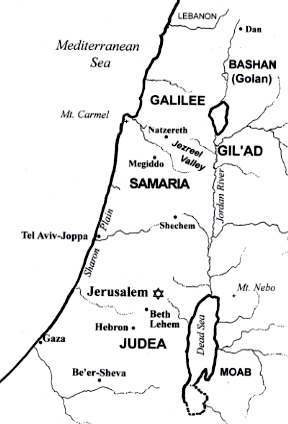 |
|
Portion QORACH (16 - 18) CHAPTER 16 1. But Qorach, the son of Yitzhar, the son of Q'hath, the son of Levi, took along both Dathan and Aviram, the sons of Eliav, and On, the son of Peleth--[all] sons of Reuven, Took along: There is no direct object indicated in Hebrew, as would be expected, so it might possibly read "But Qorach, ...along with Dathan...sons of Reuven, grasped" (i.e., tried to seize and snatch away Moshe's authority). Qorach means "bald", like the practice of the monks who also claimed to have the law-making authority that only Moshe had (under YHWH). Perhaps the sons of Reuven felt they still had some claim to leadership since their ancestor was the eldest son of Yaaqov, though Yaaqov himself had clearly taken it away from them. (Gen. 49:3ff) 2. and stood up to Moshe along with some men from among the sons of Israel--250 leaders of the congregation, famous in the assembly--men of renown. Stood up to: or formed an uprising against. What audacity they had, after just having seen the ten "spies" consumed for playing this same political game. But human nature always looks for someone to blame, especially in the aftermath of great losses like they had just experienced (e.g., 15:36). Renown: literally, "name". 3. And they assembled together against Moshe and Aharon, and told them, "[You presume] too much for yourselves, because the whole congregation--all of them are holy, and YHWH is among them. So why do you raise yourselves above the congregation of YHWH?" Too much for yourselves: LXX, "Let it be enough for you." Raise yourselves above: LXX: "set yourselves against". All of them are holy: An oxymoron, in a way. Perhaps they deduced this from the fact that the whole congregation had just stoned a man--one who they considered holy by definition since he was an Israelite. (15:36) And compared to the rest of the world, they were right, but YHWH also chose some to be the "set apart among the set apart". Qorach took advantage of the congregation at this vulnerable time, since killing a man always does something to one's soul, even when it is proper to do so. He essentially accused Moshe, the shepherd, of killing his own sheep. He tried to make it look as if he were speaking for the whole congregation, but if they are all indeed holy, why does he wish to raise himself up? This generation knew they would not be going to the Promised Land after all, so they wanted another leader to take them somewhere--even back to Egypt. They did not accept YHWH's rebuke; they kept trying to have their way and get around His sentence. Perhaps if they would have truly repented He would have always relented; He has been known to, though there are nol guarantees. But they did not, and now even their children had to pay for it. 4. When Moshe heard it, he fell on his face. 5. Then he told Qorach and all those who were gathered with him, "Tomorrow YHWH will make known who belongs to Him and [who is] holy and may come near to Him. He will bring near to Himself whomever He may choose. This type of squabbles also arose among Y'shua's congregation once they forgot they were headed back to the Promised Land, and assumed they were settling down for the long haul and had to make the best of their exile. 6. "Do this: Qorach and everyone who is with him, take firepans for yourselves, 7. "put fire in them, and set them before YHWH tomorrow [with] incense in them, and whomever YHWH chooses shall be the holy [one]. 8. "[It is you who presume] too much for yourselves, sons of Levi! He rightly turned their own accusation back on them. 9. "Is it too small a thing for you that the Elohim of Israel has separated you from among the assembly of Israel to bring near to Himself to perform the service of YHWH's dwelling place and to stand before the congregation to wait on them? Stand before: later, as musicians on the steps to the innermost courtyard of the Temple. Even Moshe did not have this privilege. 10. "When He has brought you near along with all your brothers, the sons of Levi, are you demanding the priesthood too? 11. "For this purpose, you and all those of your party who are conspiring against YHWH, [I ask you], what is Aharon, that you are complaining about him?" 12. Then Moshe sent [someone] to call Dathan and Aviram, the sons of Eliav, but they said, "We won't come up. Apparently they had made all of these accusations from a distance, "behind Moshe's back", but were unwilling to do so to his face. 13. "Is it insignificant that you have brought us up out of a land gushing with milk and honey to put us to death in the wilderness? Because you also want to control [our every move]! 14. "What's more, you haven't brought us into a land gushing with milk and honey or given us property in fields or vineyards [after all]! What are you going to do? Gouge out these men's eyes? [No], we won't come up!" Gouge out their eyes: So they will not notice that the wilderness is not the Promised Land? He was accusing Moshe of cruelty, which seems like the typical extrapolation of hearsay about what kind of a person he was--a case built on irrelevant ideas as we see so often in those with a radical agenda trying to sway people's hearts. Moshe brought his defense directly back to the Judge: 15. Then Moshe became very incensed, and said to YHWH, "Don't show any respect for their offering, because I haven't taken one donkey from them, or done anything to hurt one of them!" Compare 1 Shmuel 12:13. He could well have added, "They're only alive because I begged You for their lives!" This is the first time he did not do so, but actually cursed them, "stacking the deck" against them. Donkey: To take someone's donkey would mean they had to carry their burdens themselves. But D'vorah also said those who sat in judgment rode on donkeys (Judg. 5:10); from this we could deduce that Moshe was saying he had not taken back the position of anyone whom he had appointed as a judge. 16. Then Moshe told Qorach, "You and your whole party, be there in front of YHWH tomorrow --you, they, and Aharon! 17. "And each of you bring his firepan, put incense on them, and bring them near before YHWH--250 firepans--you along with Aharon, that is, each [with] his firepan." This should have jarred their memory with the frightening reminder of what had happened to Nadav and Avihu. 18. So each of them brought his firepan, put fire in them, lay incense on them, and stood at the entrance to the Tent of Appointment, along with Moshe and Aharon, 19. and Qorach assembled the whole congregation against them at the entrance to the Tent of Appointment. Then the [full] weight of YHWH became visible to the whole congregation. 20. And YHWH told Moshe and Aharon, 21. "Withdraw from being in the same crowd as this company, so that I can put an end to them in [one] instant." He could destroy them more easily if He could just attack the whole group at once and not have to find a way to spare some of those among them. 22. And they fell on their faces and said, "O El, Elohim of the spirits for all flesh! Shall one man sin and You be furious with the whole congregation?" 23. So YHWH said to Moshe, 24. "Tell the congregation, 'Pull up [and get] yourselves away from all around the dwellings of Qorach, Dathan, and Aviram.'" 25. So Moshe got up and went to [where] Dathan and Aviram [were], and the elders of Israel walked behind him. They went to the place of greatest danger to warn those whose lives could still be spared. 26. And he told the congregation, "I beg you, get away [now] from the tents of these evil men, and do not touch anything that is theirs, so you will not be swept away by their sins!" Evil men: LXX, "stubborn men". Do not touch: lest you be leavened by it. Have no part in what has clearly become opposed to YHWH. Even those who themselves were innocent might be punished. There was a clear line of demarcation, just like the blood on the doors in Egypt. 27. So they distanced themselves from the dwelling of Qorach, Dathan, and Aviram on every side. Then Dathan and Aviram came out and took their stand at the entrance to their tents, along with their wives, children, and toddlers. Took their stand: or stood firm, upright, with their feet planted--still defiantly unwilling to bend. 28. Then Moshe said, "By this you shall know that YHWH has sent me to accomplish all these achievements, because [they are] not from my own heart. Moshe never wished to cause anyone trouble; it was YHWH's choice to kill these cowardly rebels. 29. "If these [people] die a death like all [other] people, and if they are punished with the punishment [typical] of humankind, then YHWH has not sent me. 30. "But if YHWH makes something new happen, and the ground opens her mouth and swallows them up along with all that they own, and they go down into the underworld alive, then you will know that these men have spurned YHWH!" Something new: LXX, "a wonder"; another version reads, "a vision". They opened their mouths against Moshe; now the very ground would open its mouth against them. The underworld: Heb., She'ol, the grave or the world of the dead; LXX, "Hades". 31. Then it happened that just as he finished speaking all these words, the ground that was under them was split open, 32. and the earth opened her mouth and swallowed them, their houses, and all the people who were for Qorach, along with all their possessions. 33. They and all that was theirs went down alive into the underworld, and the earth [closed], covering them over. Thus they vanished right from the midst of the assembly. 34. And all of Israel who were around them ran away because of their voice, saying, "so the earth won't swallow us up [too]!" Voice: i.e., their cries and shrieks. 35. Then fire came out from YHWH and consumed the 250--each one who offered the incense. CHAPTER 17 1. Then YHWH told Moshe and Aharon, 2. "Tell El'azar, the son of Aharon, the priest, to remove the firepans from among [what was] burning, but scatter the fire out beyond, because they have become set apart. Scatter the fire: or throw it away. Out beyond: or "yonder"--i.e., away from the Tabernacle. YHWH had not prescribed the incense to be brought by 250 separate individuals; only one incense-bringer was necessary. They had the idea of the incense right, but expressed it wrongly. YHWH listens only to "one man"--the restored Adam that Israel began, Y'shua guaranteed, and we are in the process of composing. 3. "Let the firepans of these who sinned against their own souls be made into platings beaten thin to overlay the altar, since they have brought them near [to offer] before YHWH, so they are set apart. That way they shall serve as a warning to the descendants of Israel." 4. So El'azar the priest took the bronze firepans which those who were burned up had brought near, and they were made beaten thin to form a plating for the altar, 5. as a reminder to the descendants of Israel, in order that no outsider, who is not of the seed of Aharon, would come near to cause incense to smoke before YHWH, so he would not become like Qorach and his party, just as YHWH had told him under Moshe's direction. The point was made that there is one Holy One and one Mediator, and these men were neither. (Compare Yeshayahu 42:8) Bronze is often a symbol of fire, and thus purging from sin. It was the Levites who would see this reminder more frequently than anyone else. Yes, they served in the Temple, but no one had an audience with YHWH unless they went through Aharon (as we must now enter by way of Y'shua). Bringing incense is a symbol of Y'shua, who carries our prayers to the Father. 6. Yet the very next day the whole assembly of the descendants of Israel [again] complained against Moshe and Aharon, saying, "You had the people of YHWH put to death!" The people of YHWH: Just because they had been called by YHWH at one point, the people assumed they remained so, even though they had removed themselves from that calling in reality. They no longer deserved respect. 7. But as the group was assembling against Moshe and Aharon, they turned and faced the Tent of Appointment, and, lo and behold, the cloud had spread over it [concealing it], and the [weighty] splendor of YHWH became visible. Was assembling: LXX, "combined". 8. Then Moshe and Aharon came to the front of the Tent of Appointment. 9. But YHWH told Moshe, 10. "[This time you be the ones to] pull up [and get] away from being in the same crowd as this company, so that I can put an end to them in [one] instant." But they fell on their faces, Compare 16:21, 24. Falling on their faces was not enough this time. YHWH had just established the fact that Aharon was the mediator, so Moshe recognized that if the plague were to stop, he would have to take up his duty as such. 11. and Moshe told Aharon, "Take the firepan and put on it fire from the altar, lay incense on it, and go--quickly--to the assembly, and effect a covering over them, because [fierce] fury has gone out from the face of YHWH; the [mortal] plague has begun [to strike]!" 12. So Aharon did just as Moshe had said, and ran into the middle of the assembly, and, indeed the plague had begun among the people. So he set the incense [on the firepan] and made atonement for the people. He could no longer simply beg YHWH to act; Aharon had to act out his role as mediator. This was still miraculous; there was no direct connection between the incense and the physical cause of this death, just as there is no connection between the oil the elders apply to the sick and their healing (Yaaqov 5:13). But there is a certain prescribed order that has to be followed, not just a nebulous "salvation". It is the same difference between keeping YHWH's commandments and walking up a mountain of glass on our knees in order to impress YHWH. I.e., keeping the Torah is not a work of the flesh, but the way to express a spiritual reality. 13. Now he stationed himself between the dead and the living, and the plague was restrained. David did the same by building an altar on the place that would later become the Temple Mount. (2 Shmuel 24). They were both acting out the picture of Y'shua's mediatorship. Efrayim's king did not stoke up the fire (as per Hoshea), so the northern Kingdom went astray. But we now have a King who went to the point of death to intervene for us; he can bring the incense more effectively when not confined to flesh and blood. There is a plague already at work today, preparing for the destruction of the Lawless One, though it is being partly restrained for the present. (2 Thess. 2) 14. But those who had died by the plague [numbered] 14,700 besides those who had died in the Qorach affair. 15. Then Aharon returned to Moshe at the entrance to the Tent of Appointment, and the plague was kept under restraint. 16. [17:1 in English Bibles] Then YHWH told Moshe, 17. "Speak to the descendants of Israel, and get a rod from each of them--a rod per father's household, from every one of their chiefs: twelve rods. You shall each write his name on his rod, 18. "and you shall write Aharon's name on the rod of Levi, because one rod is for the head of the house of their father. One rod: or "each rod", but the literal sense links us better with the Messiah's being called the Rod (Mic. 6:9). He is the one Mediator between Israel and YHWH, prefigured here by Aharon. Again, Levi is "joined" to YHWH, as his name signifies. 19. "Then set them inside the Tent of Appointment, in front of the Testimony where I will meet you. Testimony: i.e., the Ark and what was inside it, which served as a witness to His covenant. 20. "Then this is what will happen: the rod belonging to the man whom I select will blossom; that way I will cause the [obstinate] complaints of the descendants of Israel (which they are making against you) to subside from [before] Me." The man whom I select: again, YHWH's "elect", another picture of Y'shua. (Yeshayahu 42:1) Compare Y'chezq'el/Ezekiel 17:24. 21. So Moshe told the descendants of Israel, and every [one of] their [tribal] chiefs each brought him a rod--one rod per ruler, for the household of their father: twelve rods, with the rod of Aharon among their rods. 22. Then Moshe placed the rods in front of YHWH, in the Tent of the Testimony. 23. And [what] happened [was that] the next day when Moshe went into the Tent of the Testimony, lo and behold, Aharon's rod had sprouted, put forth buds, produced blossoms, and yielded ripe almonds! Yielded: the same word as "weaned"; i.e., they were ready to be picked. This is a foreshadowing of the Messiah's Kingdom, when the righteous will flourish. (Ps. 72:7) When the flowers appear, it is a picture of this time. (Song of Songs 2:8-13) The almond tree (see also Yirmiyahu 1:11ff) is called the "watch-tree"--the one to watch for, because it is the first to bloom in the spring in Israel, and its budding signifies that the next full moon will be when Passover should be celebrated. But though it blooms first, it bears fruit last. It is thus also called the "resurrection tree". Almonds are edible at two different times--when they are green, and when they dry out at the end, being inedible between those times. Y'shua spoke of his two comings as "the green tree" and "the dry tree" as well. (Luk. 23:31) Like Aharon's rod, the tree (or stick) that was dead is alive again--like Y'shua. The event here pictures the Torah judging Y'shua to be worthy of resurrection. It signifies that it is time to plant barley. Almonds are part of the menorah in the tabernacle as well, so they are the sign of priestly authority. 24. So Moshe brought all the rods out from before YHWH toward all the sons of Israel, and they saw it. So each took up his rod. Saw it: also means "inspected" and "took it into consideration". Took up his rod: also means "accepted his tribe" (since a tribe is a "branch" of the family), so they recognized their sphere of responsibility and no longer tried to go beyond it. And no one was killed here. This was the same rod Moshe had turned into a serpent, part the sea, bring water from the rock, and defeat Amaleq. (Compare Exodus 4 and 7) But it did not come to life until it had Aharon's name engraved on it and was set in the right place. YHWH is restoring the tribe of Levi, because only they can build the altar and the Temple, and only then can Messiah come. 25. Then YHWH told Moshe, "Put Aharon's rod back in front of the Testimony to be preserved as a warning to the sons of rebellion, to bring their complaints to an end from [being] upon Me, so they will not die." 26. So Moshe did [so]; indeed, he did [it] just as YHWH had ordered him. 27. But the descendants of Israel told Moshe, "We're about to perish! We're being exterminated, and every one of us has given up [hope]! LXX: "We are cut off, we are destroyed, we are consumed!" 28. "Whoever comes near--who approaches the Dwelling Place--is put to death! What if we are completely consumed to [the point of] expiration? I.e., what if it keeps happening until every last one of us is gone? Approaches: LXX, "touches". CHAPTER 18 1. So YHWH told Aharon, "You and your sons, and your father's household along with you shall bear the iniquity of the sanctuary, and you and your sons along with you shall bear the iniquity of your priesthood. Iniquity: literally: crookedness. To prevent what the people feared, YHWH made the priests and Levites responsible to keep the wrong people from approaching. 2. "And along with yourselves, you shall also bring near your relatives, the tribe of Levi, the tribe of your [own] ancestor; they shall be joined to you to wait on you [in service]--and your sons along with you--in front of the Tent of Testimony. Joined: or "lent"; the root word is the same as that of "Levi". In front of: but not inside. 3. "And they shall guard your ceremonial office and the obligatory functioning of the whole Tent, but they shall not get near the vessels of the sanctuary or the altar; they will not approach, so they will not die--neither they nor yourselves! If anyone else did die due to his approach, it would mean the Levites were not doing their duty, and thus they too would be guilty. 4. "But they shall be on loan to you, and shall guard the functions of the Tent of Appointment for all the servile work of the Tent, so an outsider shall not approach you. On loan to you: or extra attendants added in addition to you. Functions: or valuables; literally, "things that are to be guarded". 5. "And you shall guard the functions of the sanctuary and the functions of the altar, so there will be no more wrath upon the descendants of Israel. 6. "And indeed, I have taken your relatives, the Levites, out from among the descendants of Israel for you; they are like a gift given to YHWH to carry out the service of the Tent of Appointment. 7. "But you and your sons along with you shall guard your priestly office for every affair pertaining to the altar and up to [what is] inside the veil you shall perform the service. I will give you your priestly office as a service of giving [as one is able], but the outsider who approaches shall be executed." Guard: LXX, "keep up". Outsider: or one who is estranged, having forsaken the covenant. 8. Then YHWH told Aharon, "Now I--I indeed--have given you charge of My contributions, for all the devoted things of the descendants of Israel. To you have I given them for [the sake of] the anointing--and to your sons as a prescribed due forever. This is the compensation for having such a heavy responsibility. 9. "From the holiest of the holy things, this is what will be yours: from the fire, everything they bring near for any grain offering or any sin offering, as well as all of their guilt offerings that they return to Me. 10. "It shall be most holy to you and your sons; in the holiest of holy places shall you eat it. Every male may eat it; it shall be holy for you. 11. "And this is for you: the contribution [lifted off] from what they give for all the wave offerings of the descendants of Israel; I have given them to you and to your sons and daughters along with you as a prescribed due forever. Everyone in your household who is ritually pure may eat from it. 12. "All the best of the [glistening, pure] pressed oil and all the best of the freshly-pressed wine and grain--the first of which they give to YHWH--to you I have given [it]. Grain: or produce. 13. "The firstfruits of all that is on their land, which they bring to YHWH shall be yours; everyone in your household who is ritually pure may eat from it. Firstfruits: or that which ripens first. 14. "Everything that is dedicated [to YHWH] in Israel shall be yours. Everything dedicated: or that which is forfeited, perhaps belonging to those who must be executed for their sins. At the time of the conquest of the Land it referred to things that were placed under the "ban"--wholly devoted to destruction. 15. "Everything that opens the womb of all flesh which they bring near to YHWH, [from] among men or animals, shall be yours--though for sure you must ransom the firstborn of humans; you shall also redeem the firstborn of unclean beasts. Ransom/redeem: the same word, meaning to rescue from being killed (especially in the case of humans) by accepting the equivalent value in money. (v. 16) An unredeemed firstborn donkey had to be killed in a certain way. (Ex. 13:13) 16. "And [what is to be] redeemed from them, from a month old [and up], you shall redeem with five sheqels, at your valuation of silver, according to the sheqel of the sanctuary, which is twenty gerahs. 17. "But the firstborn of cattle, the firstborn of sheep, or the firstborn of a she-goat, you shall not redeem; they are set apart. You must dash their blood against the altar and make their fat go up in smoke as a fire offering--a soothing aroma to YHWH. 18. "But their meat shall be yours, as the breast of the wave offering and the right foreleg shall be yours. Perhaps once the Temple was established, the firstborn were given to the Levites in each region on one of the two annual occasions when it was their turn to go up and serve in Yerushalayim. 19. "All the contributions from the holy things which the descendants of Israel shall lift up to YHWH I have given to you and your sons and daughters along with you, to be a prescribed due forever; an eternal covenant of salt it shall be before YHWH for you and for your seed along with you." Covenant of salt: symbolizing eternity and something to be preserved. 20. Then YHWH told Aharon, "You shall receive no inheritable property in the Land, nor shall you have any share among them; I am your share and your inheritance among the descendants of Israel. Inheritable property: literally, "that which flows", i.e. from one generation onward. Share: or "divided portion". 21. "Now to the sons of Levi, behold, I have given all the tithe in Israel as an inheritance in return for all the service which they carry out--the service of the Tent of Appointment. 22. "The descendants of Israel shall not come close to the Tent of Appointment anymore, [which would lead them] to take on guilt [and] to die [for it]. 23. "Rather, the Levite is the one who shall carry out the service of the Tent of Appointment, and they shall bear their crookedness, as an eternally-prescribed appointment for your generations; but among the descendants of Israel, they shall have no inheritance, 24. "because the tithes of the descendants of Israel, which they shall bring near to YHWH I have given to the Levites as a contribution [skimmed off the top] as an inheritance. That is why I have told them that they are to inherit no property that they can pass on." The Levites had no farms of their own, so they depended directly on YHWH for their daily bread--but this also meant they were free from other concerns so they could conentrate fully on the special task He had given them. But Paul said those who bring the Gospel were permitted to live thereby (1 Cor. 9:14), though he did not exercise that privilege. The Hebrew word for "Gospel" is the same as for "flesh" or "meat". A teacher certainly learns more when preparing to teach. If the Levites stopped teaching the people the Torah, the people would stop bringing their firstfruits and tithes, and they would not have food to eat. 25. Then YHWH told Moshe, 26. "Speak [again] to the Levites, and tell them, 'When you receive from among the descendants of Israel the tithe that I have given you from them to be your inheritance, you shall lift off a contribution to YHWH from it--a tenth of the tithe. 27. "And your contribution shall be calculated for you like grain from the threshing floor and like full [produce] of the winepress. 28. "Likewise, you shall lift off the contribution to YHWH from all the tithes that you receive from the descendants of Israel, and from it you shall give YHWH's contribution to Aharon the cohen. 29. "Out of all that is given, you shall lift off YHWH's whole contribution out of all its best and the parts of it that are set apart. 30. "And tell them, 'When you lift off its best part out of it, it shall be calculated for the Levites like the produce of the threshing floor and the produce of the wine-vat. Calculate...like...: i.e., by the same percentage as... 31. "Also, you may eat it in any place, you along with your households, because it is your reward in exchange for your service in the Tent of Appointment. 32. "And you shall bear no guilt on account of it, since you have lifted off its best part from it. Do not desecrate the holy things of the descendants of Israel, and you will not die." Bear no guilt: If the part that belonged to YHWH were not separated off, they would be stealing from Him. Desecrate: lower by putting it to common use, when it has been dedicated to holy use alone, or eating the portion which was to be their tithe. Give it back to Him, and you have earned the other 90%. As the fullness of the earth belongs to YHWH, yet He gives most of it back to us when we recognize that it is from His hand. |
|
|
|
|
|
|
|
|
|
|